On this page
A city-wide celebration
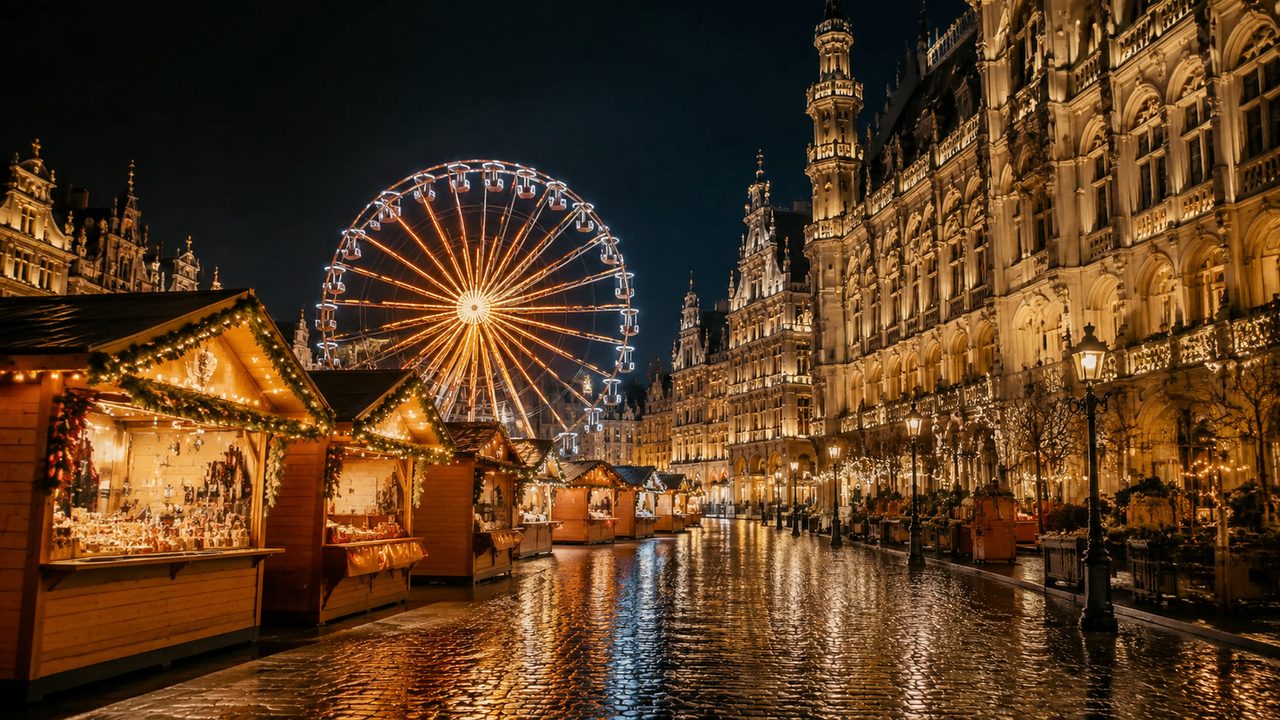
Brussels' Winter Wonders is bigger than a market: it is a festival that takes over the city centre from the end of November to the first days of January. Around two hundred wooden chalets line the Grand-Place, the Marché aux Poissons and the streets around Place Sainte-Catherine, while the boulevards between them are strung with lights and lined with rides. The name has been in use since 2000, and the city has steadily enlarged it — to the point where the advice is to plan a route, because wandering at random means doubling back.
The Grand-Place
The centrepiece is the Grand-Place, one of Europe's most theatrical squares. In December its gothic and baroque guild houses are lit up each evening by a sound-and-light show that runs in loops after dark, and a large Christmas tree — often flown in from a partner country — stands at the edge of the stalls. The chalets here sell the priciest, prettiest goods in the festival, and the crowds are heaviest in the first hours after the lights come on. Come before sunset to see the square by day, then stay for the first show; the transition is the best part.
The ferris wheel and the ice rink
Two attractions anchor the festival beyond the stalls. The ferris wheel, usually placed near the Place de la Monnaie end of the circuit, gives the classic view over the rooftops and the lit boulevards; the queue moves steadily and the ride is worth it once, especially just before the light shows start. The ice rink, set up near the market's food quarter, draws a steady crowd of skaters and spectators. Neither is cheap and both are popular, so go early in the evening rather than late, when the lines double.
Food and drink
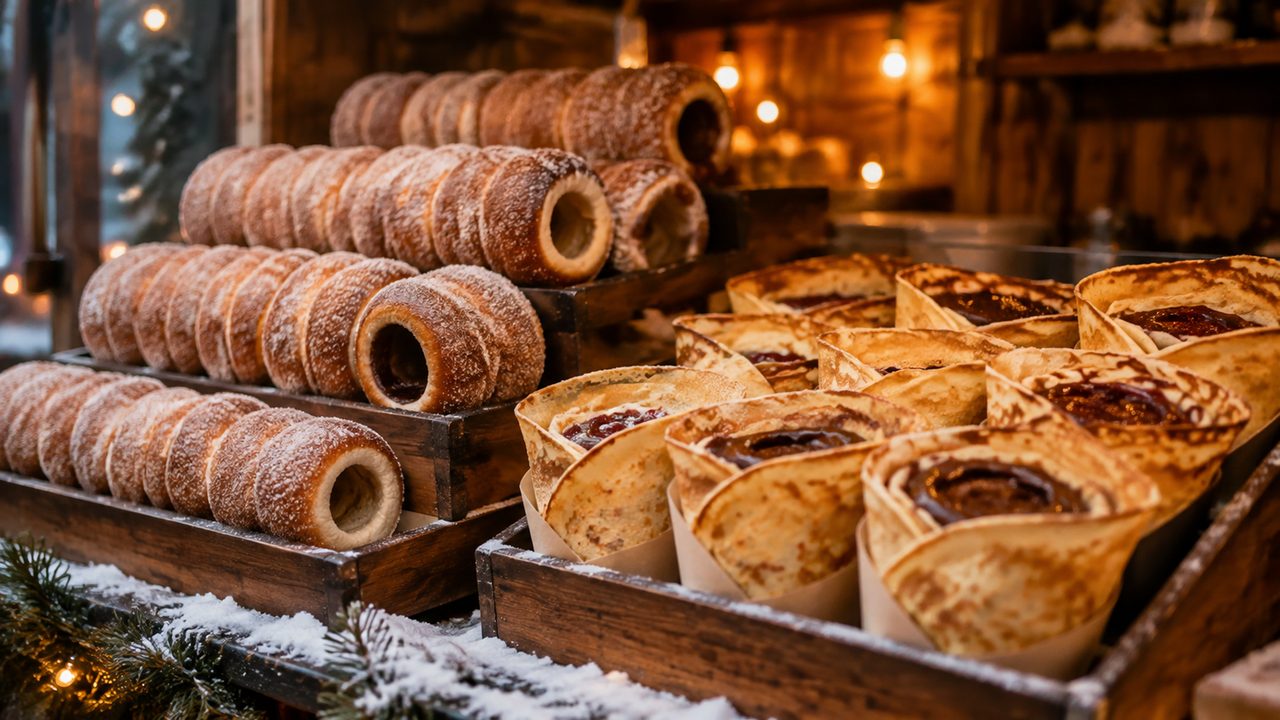
The food quarter is where Winter Wonders earns its repeat visitors. The standards are Belgian: hot waffles with powdered sugar or chocolate, frites from a cone, and mulled wine that the stalls label glühwein regardless of language. The chocolate is the local pride — buy it from the stalls run by Belgian chocolatiers rather than the generic sweet stands, and try the hot chocolate alongside it. Prices run about €4 for a waffle and €5 to €6 for mulled wine with the deposit mug. The food stalls around Place Sainte-Catherine, near the old fish market, are the most generous with portions.
The shape of the festival
Understanding the geography makes the difference between a good and a great visit. The festival runs roughly in a loop: the Grand-Place for lights and gifts, the boulevards for rides and the crowds, and the Sainte-Catherine quarter for food and a more local feel. The quieter end is toward the canals, where the chalets thin out and the Brussels residents outnumber the visitors. Allow an evening for the loop and a second evening for the parts you rushed; two nights is the minimum for the full experience.
Practical notes
The 2024–25 Winter Wonders ran 29 November to 5 January, with stalls open from around noon to 10pm and the light shows on the Grand-Place starting after dusk — check the daily times, as they shorten in January. The festival is free to enter, but the wheel, the rink and the rides are paid. Weekday evenings are the calm window; the weekends before Christmas and New Year's Eve are not. Brussels is well served by train from London, Paris, Amsterdam and Cologne, which makes it an easy city to bolt onto a longer winter trip.