On this page
Why Alsace runs the route
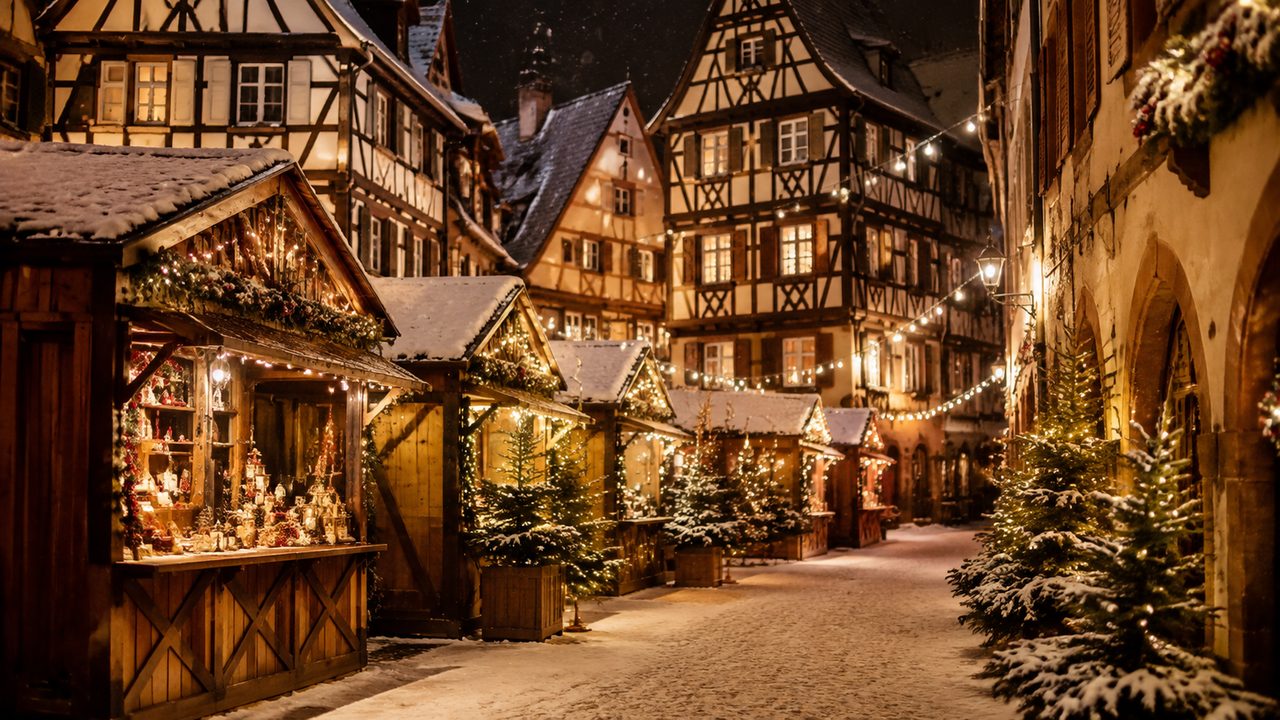
Alsace claims to have invented the Christmas market — Strasbourg has called itself the Capital of Christmas since the 1990s — but the region's real advantage is density. In a drive of an hour you pass Strasbourg, Colmar and a dozen fortified wine villages, each with its own December market, all sharing the same half-timbered architecture that makes the whole region look like a Christmas card. The three-day circuit below takes the two big cities and the villages worth stopping for, with each day a manageable distance and a clear evening destination.
Day one: Strasbourg
Start in Strasbourg, the region's capital and its biggest market. The city runs a dozen market sites, but the essential ones are the Place de la Cathédrale, where the market clusters at the foot of the cathedral, and the Place Broglie, home to the main Christkindelsmärik and the great tree. The cathedral is the best orientation point: the market wraps around it, and the stalls near the facade sell the prettiest ornaments in the city. Allow a full day and a night — Strasbourg deserves a second evening for the light shows and the quieter market at the Petite France quarter.
Day two: Colmar
An hour south by train or car, Colmar runs five markets around its old town, and its half-timbered streets are even more photogenic than Strasbourg's. The main market spreads across the Place de l'Ancienne Douane, with smaller sites at the Dominican church and the Petite Venise canal quarter, whose timbered houses mirror in the water. The gourmet market at the Koïfhus, the old customs house, is the one for food presents. Colmar is smaller than Strasbourg, which makes it feel more festive and more crowded in proportion — arrive by mid-morning and plan to stay through the evening lights.
Day three: the villages
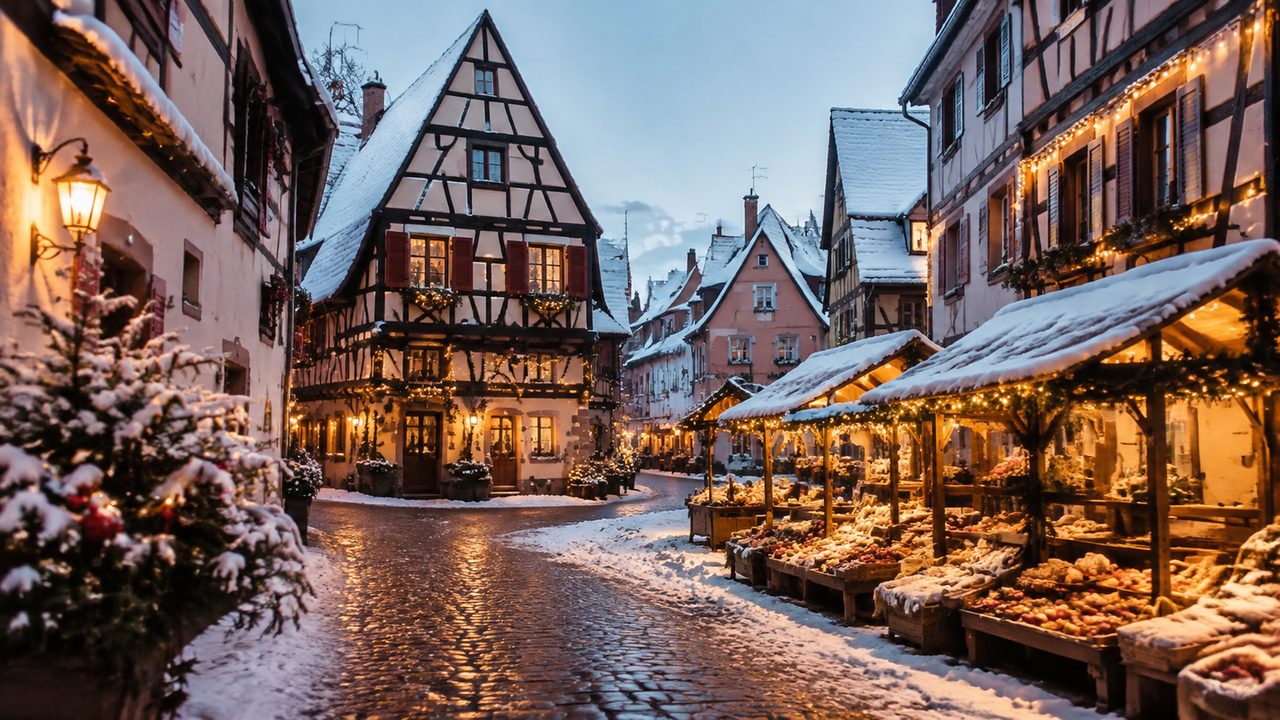
The third day is the one that makes the trip. From Colmar, the wine route north delivers the best small markets in quick succession. Eguisheim, a circular medieval village, sets its stalls in rings around the central square and is the most beautiful of the three. Riquewihr, walled and pedestrian, runs its market inside the ramparts with the wine cellars open for tastings. Kaysersberg, on the river of the same name, has the most authentic local crowd. Each village takes two hours — one to walk, one to eat — and all three are within a twenty-minute drive of Colmar.
Transport and timing
A car is the practical choice for the village day, since the small markets sit on roads with limited parking outside the walls. Trains link Strasbourg and Colmar reliably, and the villages are reachable by bus, but slowly. The markets run from late November to the first days of January, with the village markets often closing by 23 or 24 December — check each one, because the small ones end early. Weekday mornings are the quiet window everywhere; the weekends of Advent are the region's busiest days of the year.
What to eat
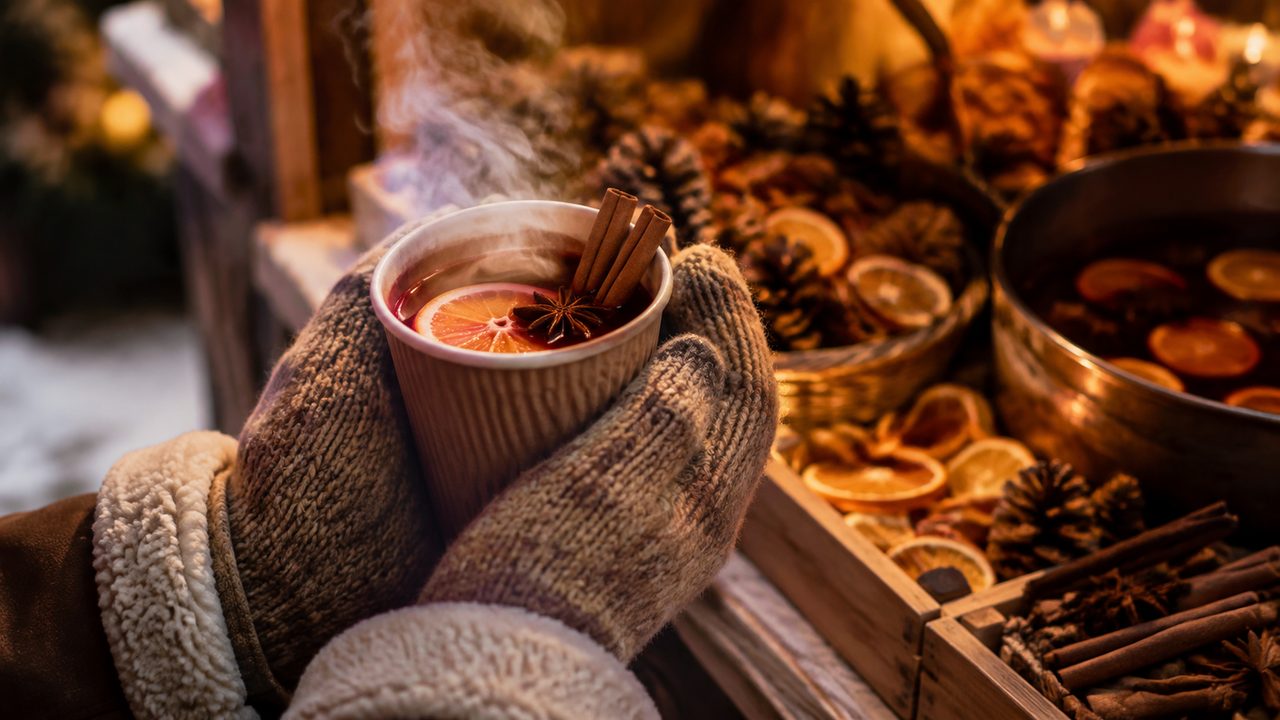
The Alsatian food is the best part of the circuit. Bredele, the little spice biscuits sold in every market, are the regional equivalent of gingerbread and the ideal souvenir. For meals, the region's own answers to winter food are tartes flambées — the thin, smoky flatbread with cream, onion and bacon — and choucroute, the sauerkraut dish that appears on market menus in the coldest weeks. Mulled wine here is often white or rosé, not red, and the villages serve it with the same deposit-mug system as Germany. Buy a box of bredele at each market and compare; the bakers' pride is real.