On this page
One square is enough
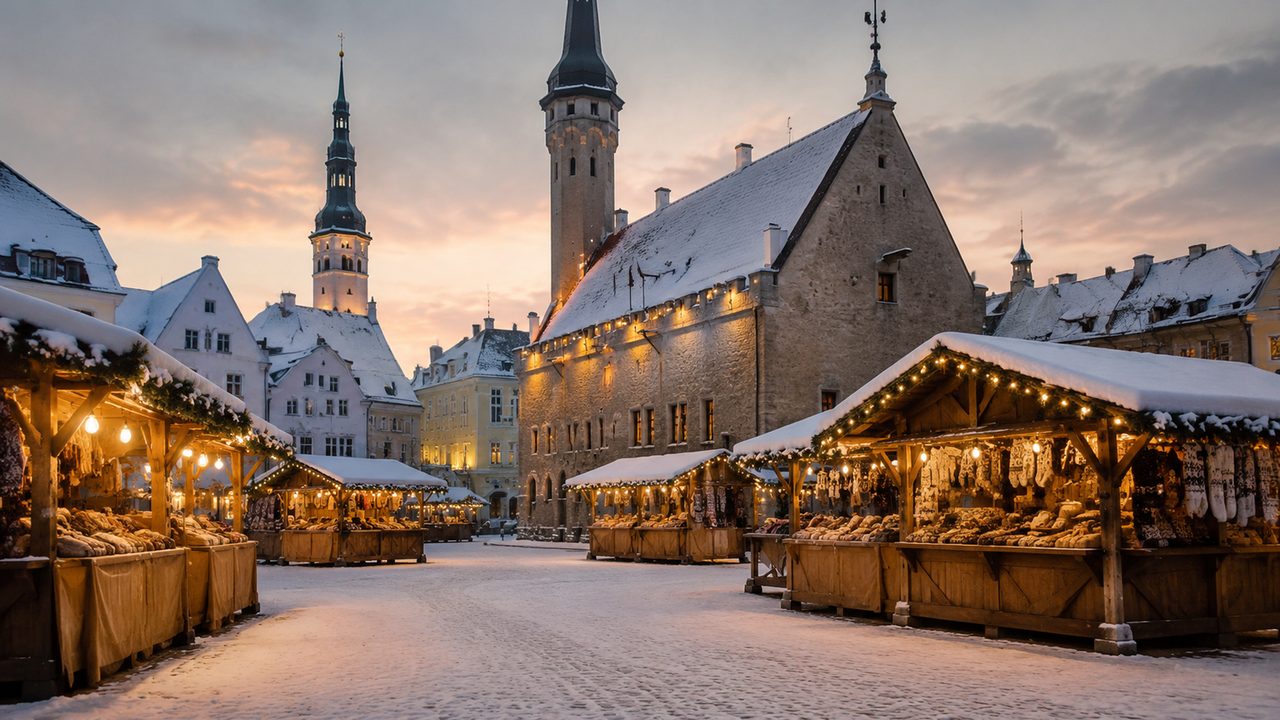
Tallinn's Christmas market is not a circuit of five sites or a light festival spread across boulevards. It is a single square — Raekoja plats, the Town Hall Square — done with unusual care. The old town around it is a UNESCO-listed maze of 15th-century streets, and the market slots into that setting rather than fighting it. The result is the most photographed market in the Baltics and one of the most atmospheric in Europe, especially when snow settles on the rooftops.
The heart of it: Raekoja plats
The square is dominated by the Town Hall, a gothic building with a tall spire and, on its facade, Estonia's oldest weather vane — the Old Thomas, a soldier figure from 1530. The market arranges its wooden stalls in a ring around a large spruce tree, and a small stage hosts concerts and dance performances through the season. The market runs from late November into the first days of January; in the 2024–25 season it was open from 22 November to 5 January. Everything is scaled to the square, so it stays walkable even at its busiest.
What to eat and drink
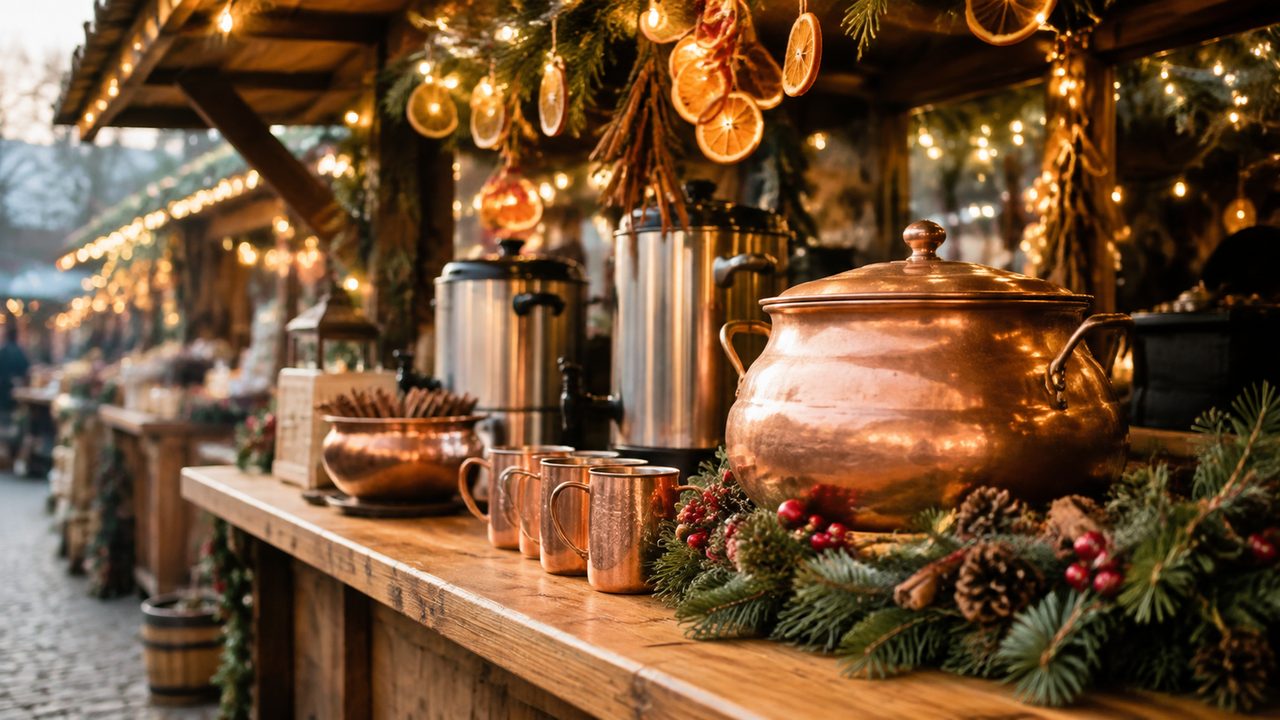
The drink to order is hõõgvein, Estonian mulled wine, served hot with spices and often with a mug you can keep — prices sit around €5 to €7 for the collector's version, less if you return the cup. The food stalls do roasted almonds, gingerbread and, for the brave, verivorst, the blood sausage served with sauerkraut that Estonians eat through December. Piparkoogid, thin spiced gingerbread cookies, are the local Christmas staple, sold in tins and paper bags. In a market this cold, the warm food stands are the social centres; do not skip the cocoa stall.
Shopping for Estonian things
Tallinn's market is a good place to buy gifts that come from somewhere. Look for wool mittens and hats — the traditional Estonian patterns are still knitted locally — plus juniper-wood kitchenware, beeswax candles, honey and handwoven textiles. The craftspeople who staff the stalls are often the makers, which is rarer at big-city markets. For more, the adjacent streets of the old town are lined with design shops, and the Telliskivi creative quarter, a fifteen-minute walk from the square, has its own smaller winter market with a younger crowd.
A medieval backdrop
The market is the evening event, but the old town is the reason the setting works. Climb to Toompea Hill behind the square for the classic view over the red-tiled roofs, walk the surviving city walls, and visit the town's churches, some of which host Advent concerts. The streets are lit with strings of lights, and in late December, when the days are short and the square is white with frost, the whole old town reads like a children's book illustration. Plan for the cold and you will be rewarded with the emptiest evenings in the last week of November.
Practical notes
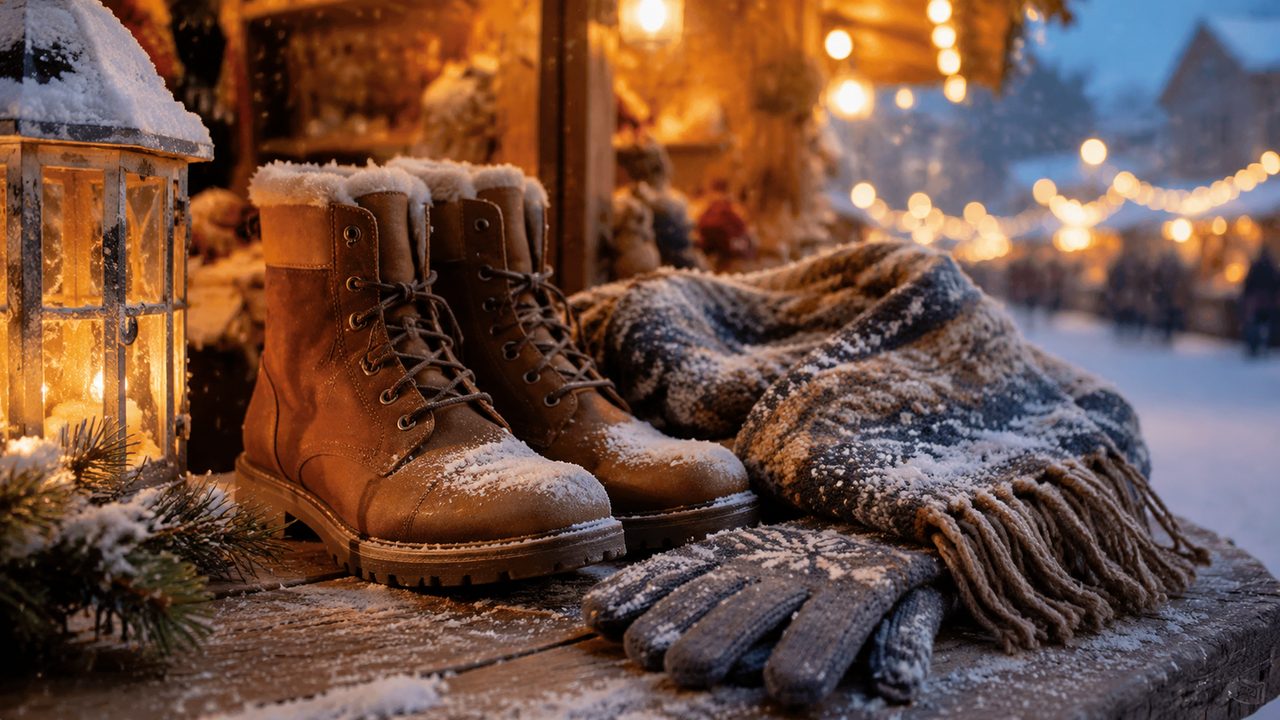
December in Tallinn is genuinely cold — daytime highs often sit between -5°C and -1°C, and it can drop below -10°C at night. Dress in layers, wear boots with grip, and keep phone-glove compatibility in mind before you need it. Estonia uses the euro, and most stalls take cards, though small notes are easier at the food stands. The square is at its calmest on weekday mornings and its busiest on the two Saturdays before Christmas; the last days of the season, after 27 December, thin out noticeably. Tallinn is a short ferry or flight from Helsinki, and the two cities make a natural Baltic pairing for a winter trip.