On this page
The title, earned
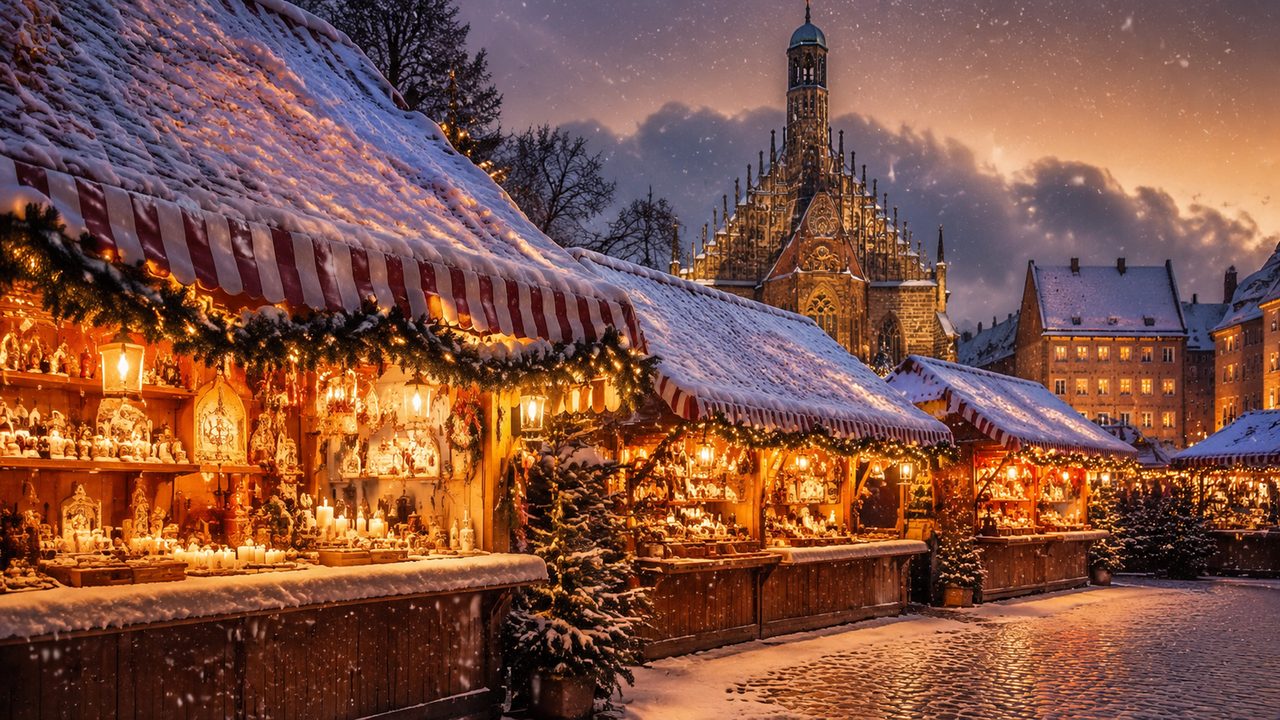
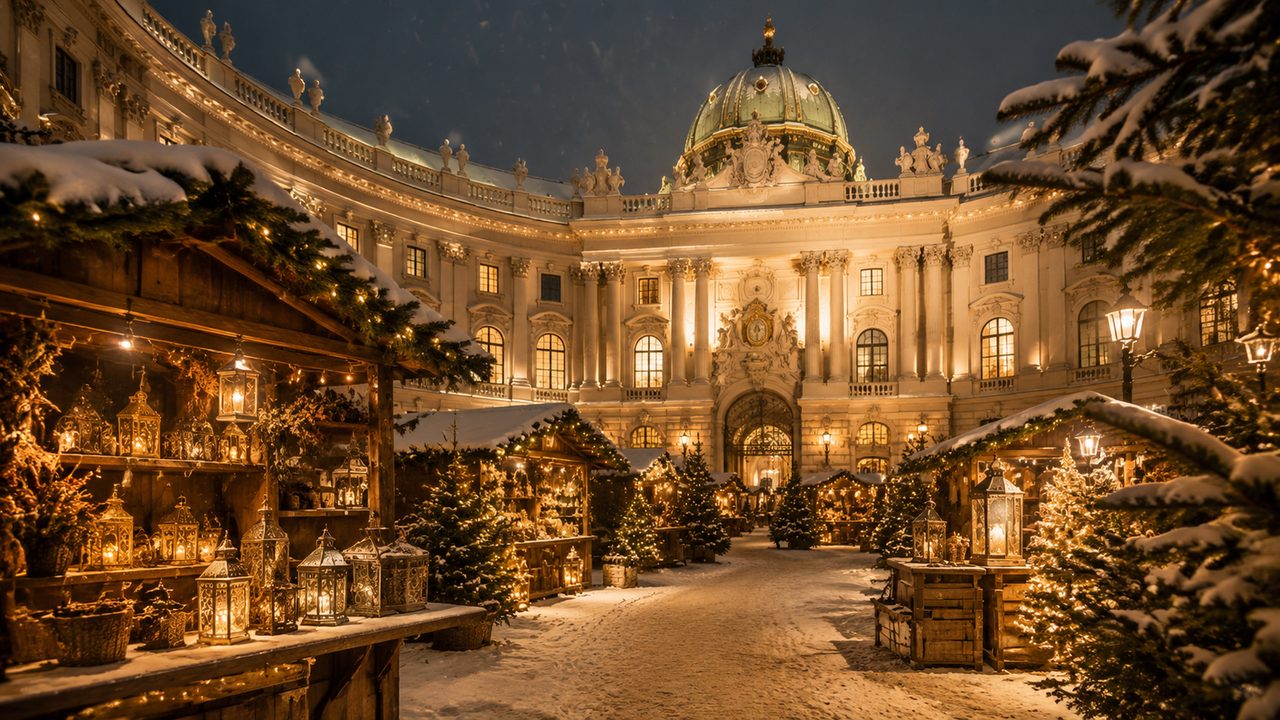
Strasbourg has called itself the Capital of Christmas since 1992, a slogan the city's tourism office defends with numbers: around 300 wooden chalets spread across a dozen sites in the centre, a market tradition that predates the modern French state, and a 30-metre Christmas tree on Place Kléber that takes a crane and several days to dress. The claim is marketing, but it is marketing backed by the biggest and oldest Christmas market in France — and by a city that clearly enjoys the role.
The oldest market: the Christkindelsmärik
The original market has been held since 1570, first around the cathedral and later on Place Broglie, where it still stands. By the late 19th century it had grown to 250 stalls, and the Broglie site remains the most traditional of the city's markets — food, gifts and a wide avenue that makes it the easiest site to move through with a pushchair. The name, a nod to the Christkindl tradition across the Rhine, is a reminder that this corner of France has been trading Christmas with Germany for four and a half centuries.
A walking route through the sites
Start at the cathedral. The stalls around its south side sell the finest crafts — glass ornaments, wooden toys, Alsatian ceramics — and the queue for the astronomical clock inside is shorter in December than in summer. From there walk north to Place Kléber to see the tree; the ice rink was removed a few years back, but the tree remains the city's centrepiece and the square is best at dusk, when the lights switch on.
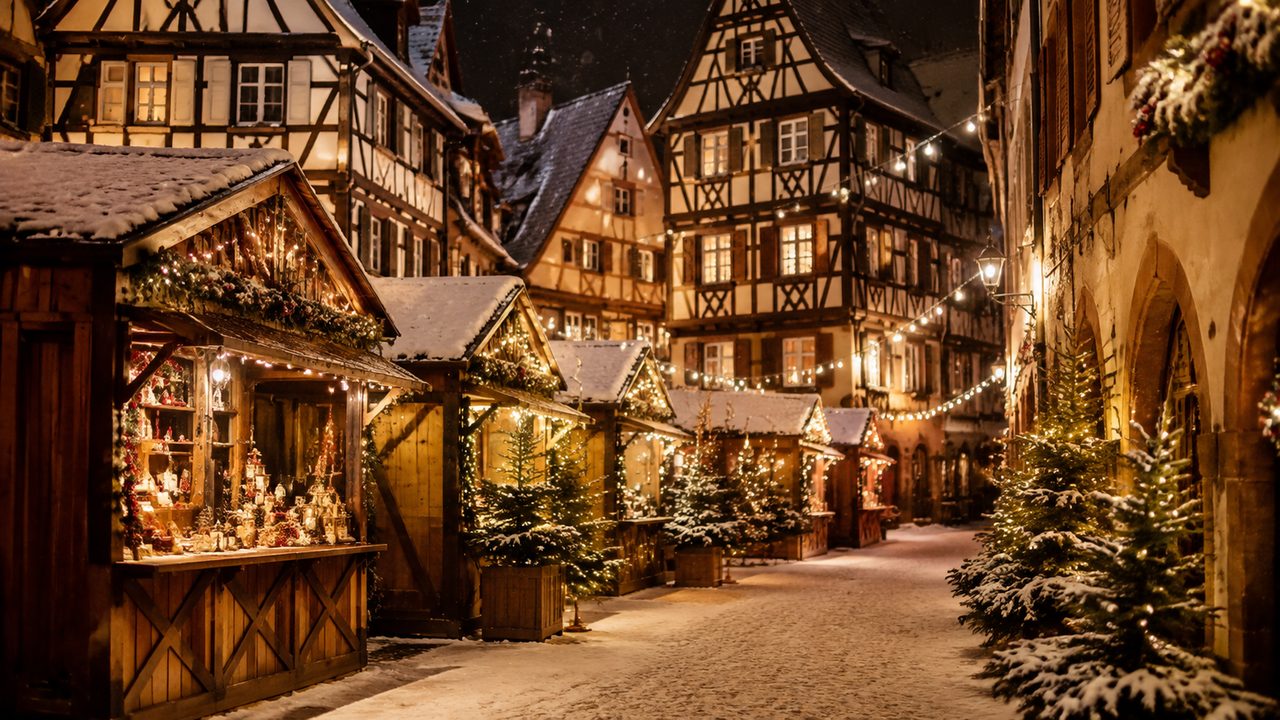
Loop back through Petite France, the half-timbered quarter at the west end of the old town, where smaller markets string along the canals. This is where the locals actually shop, and where the light over the water makes the evening photographs. Beyond the old town, the Alsatian village site gathers regional producers who sell honey, jam, wine and cheese from decorated chalets rather than generic gift stalls.
The Alsatian table
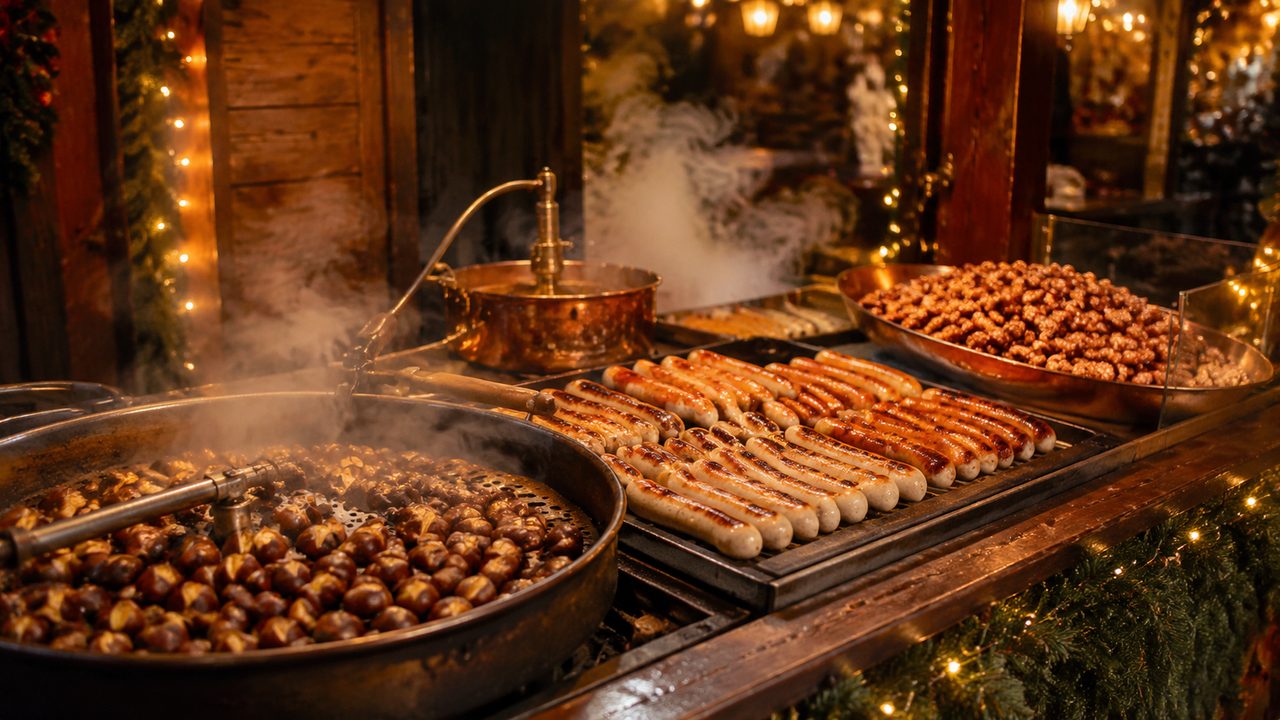
Food is where Strasbourg separates itself from the German markets. Bredele — tiny spiced biscuits, sometimes cinnamon, sometimes aniseed — are baked in nearly every household and sold from the city's boulangeries; buy them there rather than at the market stalls, where the same biscuits cost double. Mannala, brioche men baked for St. Nicholas Day on 6 December, appear in the windows around then.
The market snacks run to flammekueche, the Alsatian tart of cream, onion and bacon, cooked in wood-fired ovens at stalls near the cathedral. Vin chaud is made with orange peel and star anise, sometimes a spoon of honey, and costs around €4 to €5 a mug including the deposit. For a quieter evening, the wine chalets pour Alsatian whites — Gewurztraminer and Pinot Gris — which suit the cold better than anything you brought from home.
When to go
The market runs from the last Friday of November until 27 December in most recent years, with the final afternoon finishing early. Saturday afternoons are gridlock; go midweek after dusk, when the lights come on and the day-trippers thin out. The tram network reaches every market site, so you can hop between them without walking the same street twice — and you will want to, because a one-evening visit only scratches the surface.
Beyond the chalets
The cathedral facade gets a nightly light projection, and the half-timbered houses of Petite France are decorated with more restraint than the big squares — worth a slow evening walk on its own. Strasbourg rewards a second day: the Christmas shops in the streets around the cathedral, the museums, the covered bridges. Most visitors stay one night and leave regretting it. Book two.