On this page
Why the circuit works
Prague, Budapest and Kraków sit at roughly the points of a triangle, connected by direct rail links, and their markets could not be more different. Prague's is the most beautiful square, Budapest's the most theatrical, Kraków's the most intimate. Together they make a week-to-ten-day trip that costs noticeably less than the German or Austrian equivalent, with food and drink that taste genuinely local rather than exported. Start in Prague, work south to Budapest, then north-east to Kraków, and the pacing gets easier.
Prague: two squares, one city
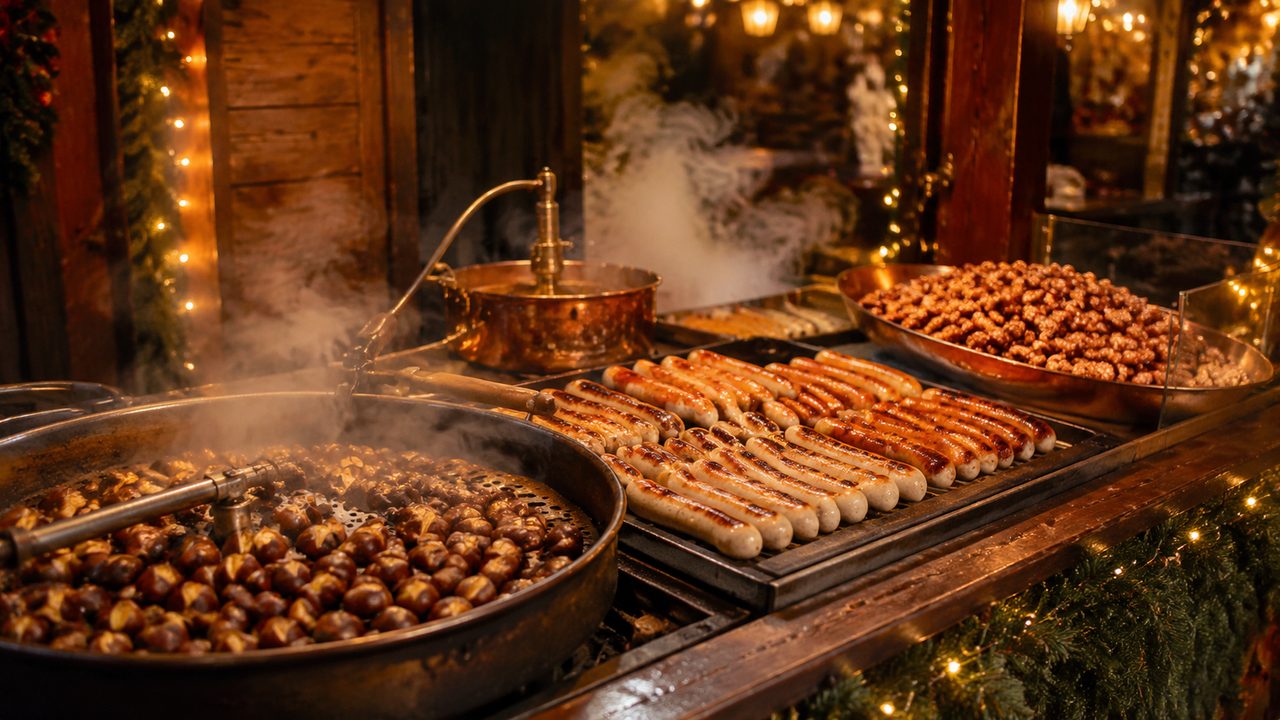
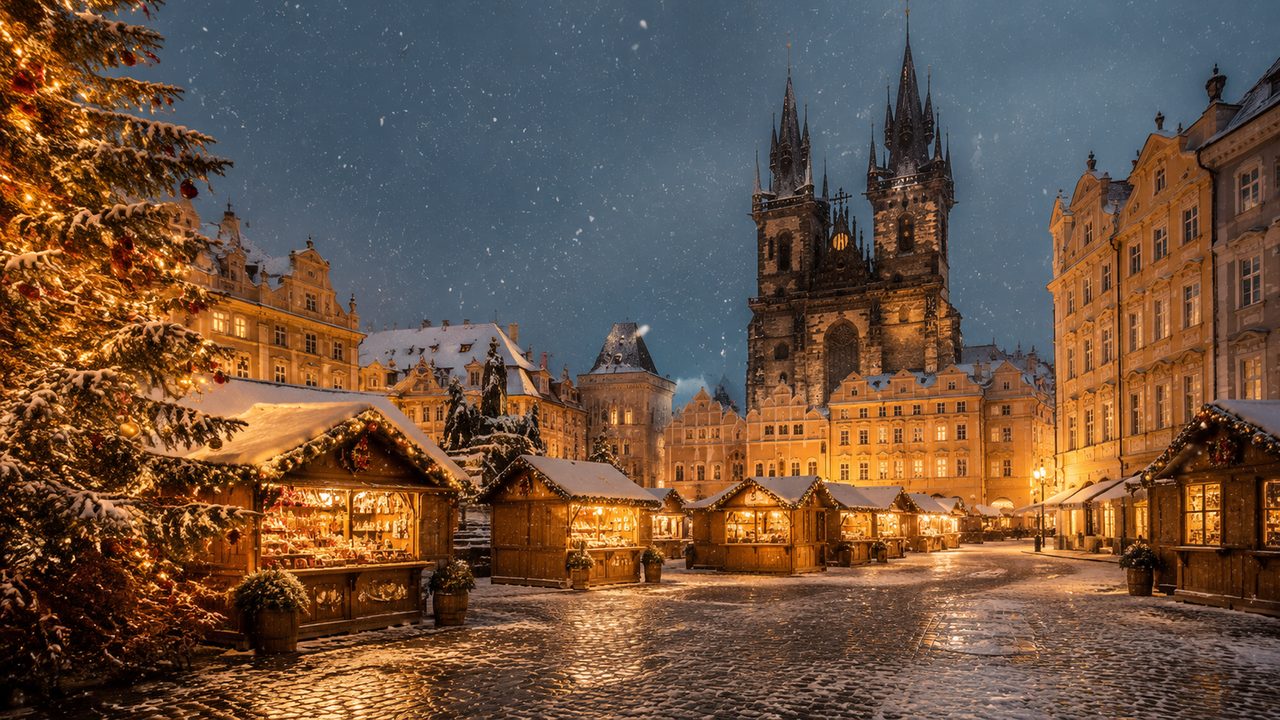
The markets sit in the squares, not the streets: the Old Town Square and Wenceslas Square, ten minutes' walk apart. The Old Town Square is the one to photograph — the astronomical clock tower, the baroque church, the big tree — and the one to avoid between 4pm and 7pm, when it becomes a moving crowd. Drink svařák, the Czech mulled wine, and medovina, warm mead; eat klobása, grilled sausage in a roll, bramborák, a potato pancake, and smažený sýr, fried cheese that is exactly as good as it sounds. The trdelník, the chimney cake, is everywhere; the local argument is about who makes it properly, so try two stands and pick a side. The markets run from the start of Advent to early January in most years.
Budapest: the theatrical one
Vörösmarty Square hosts the classic market, now more than two decades old, and it is the most traditional of the three: folk crafts, embroidery, wooden toys and the smells of grilled food. The newer contender is the Advent Basilica market beside St Stephen's Basilica, which adds a light projection on the church facade, an ice rink and evening concerts. Drink forralt bor, the Hungarian mulled wine, and eat kürtőskalács — the chimney cake grilled over charcoal and rolled in sugar — plus lángos, fried dough with sour cream and cheese, from the stalls that make it fresh rather than reheated. The markets run from mid-November to the end of the year.
Kraków: the intimate one
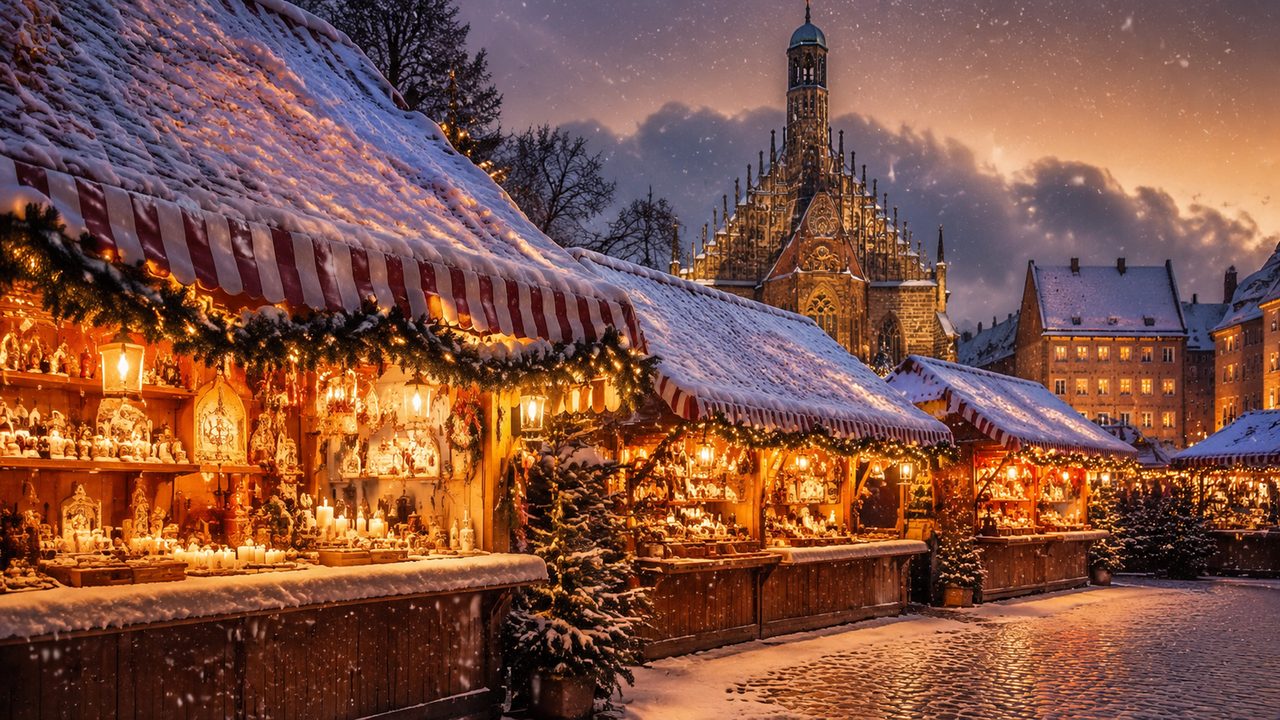
The market on the Rynek Główny, the vast main square under the gothic towers of St Mary's Basilica, is the most intimate of the three. The food is the reason to go: oscypek, the smoked sheep's-milk cheese from the Tatra mountains, grilled and served with cranberry sauce; grzaniec, mulled beer or wine; pierogi at a handful of stalls; bigos, the hunter's stew, at the hot-food booths. The szopki — ornate, often comic Christmas cribs — are a Kraków tradition, with the competition held in early December in the square. The market runs roughly from late November to 26 December.
Getting between them
Prague to Budapest is the classic route, about seven hours by direct train through the countryside, and Budapest to Kraków connects by train with a change or by a short flight. Prague to Kraków is the long leg; a night train is the romantic option, a flight the practical one. Book trains in advance — the sleeper compartments sell out in December — and leave a buffer day in each city rather than stacking night after night.
Budget and money
Prices sit well below western Europe. A mulled drink runs about 90 to 150 koruna in Prague, 1,500 to 2,000 forints in Budapest and 20 to 30 złoty in Kraków — roughly €3.50 to €6.50 everywhere. Each city uses its own currency, and each has ATMs near the squares. Cards work at the bigger stalls, but the small food stands still prefer cash, so carry small notes in the local currency and change the leftovers before you cross the border.
Packing and timing
Give each city two to three days. Early December is quieter and cheaper than the final week, when hotel prices climb and the squares become standing-room-only from late afternoon. Pick one market per evening rather than trying to see them all: the best evenings are the ones spent in one square, with one drink and one long queue for something grilled. And check the official market dates before you book — the opening and closing days shift every season, and a market that closes on 26 December is a quiet place on the 27th.