On this page
The rules of the market kitchen
Every German market runs on the same economics: a few big food stands, queues measured in minutes, and a deposit system that means your first drink buys you a mug. Learn the rhythm and you will eat better than the people improvising. Rule one: cash, in small notes. Rule two: the mug deposit, or Pfand, is a few euros and refundable at the stand that issued it. Rule three: portions are bigger than they look, and sharing is expected — this is snack food, not a sit-down meal.
Bratwurst, done properly
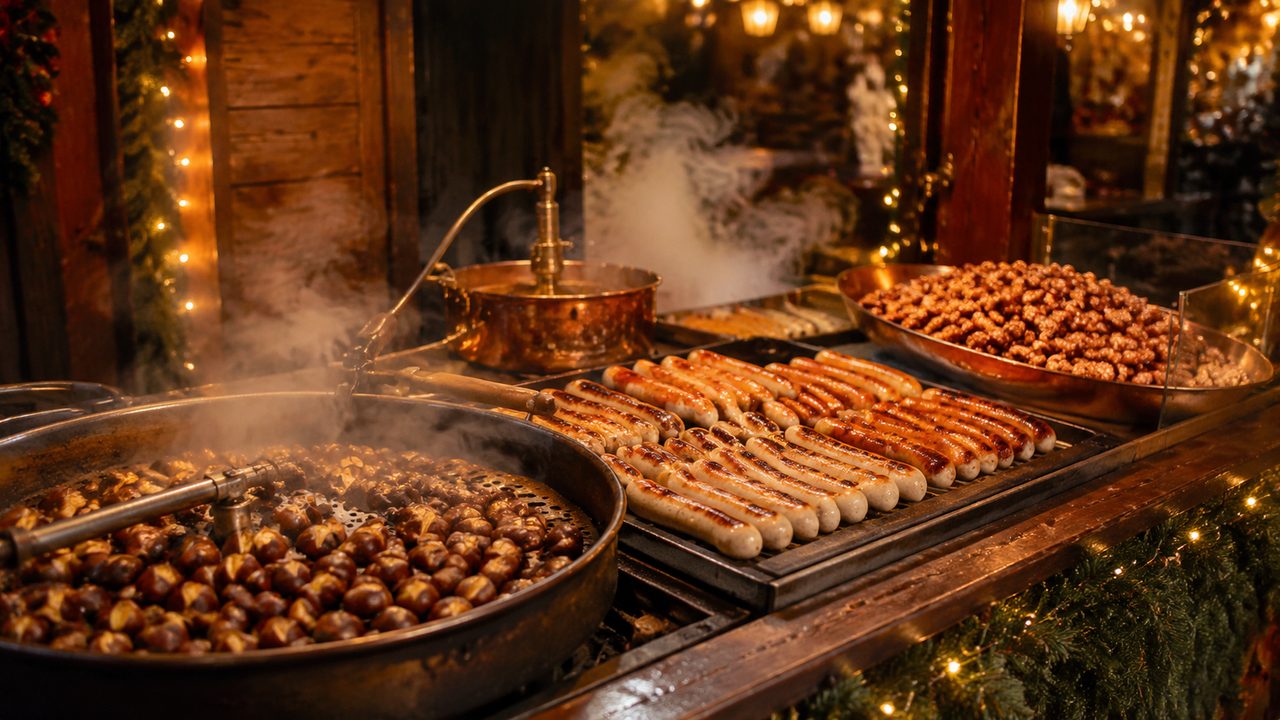
The sausage is the market staple, and every region argues about the recipe. Nuremberg does it smallest and strictest: "Drei im Weggla", three sausages in a roll, around €4.50, grilled over beechwood coals. Thuringia's answer is the longer Thüringer bratwurst, served in a roll with mustard. Berlin, predictably, does currywurst — sliced and drowned in curried ketchup. The general rule applies everywhere: the stall with the queue and the charcoal fire beats the stall with the big menu board and the microwave.
Fried things: the reliable second course
Kartoffelpuffer, potato pancakes fried to order and served with applesauce, are the default for vegetarians and everyone else who wants something hot, cheap and reliable. Schmalzkuchen — fist-sized pieces of fried dough dusted with sugar — are the market doughnut, sold by weight in paper bags. Mushrooms pan-fried in garlic cream and parsley come in paper bowls and are the best thing to eat while walking. Flammkuchen, the thin Alsatian tart of cream, onion and bacon, has crossed the border and appears at most southern markets.
Sweet things
Gebrannte Mandeln, caramelised almonds, are the scent of every German market — buy one bag and let it last the whole evening. Magenbrot, thick glazed gingerbread slices, are spicier than they look and go well with mulled wine. For serious sweets: Nuremberg's Elisenlebkuchen, Dresden's Christstollen (the market that sells it, the Striezelmarkt, dates to 1434), and Baumkuchen, the layered spit cake that gets its name from looking like a tree's rings.
Buy the sweet things at the end of the evening, not the start: they crush badly in a coat pocket, and the stands sell the same batch all day. If a bakery in town sells the same Lebkuchen tin for less, it is the same tin — the market markup pays for the lights and the music, and it is a fair trade once.
The drink system
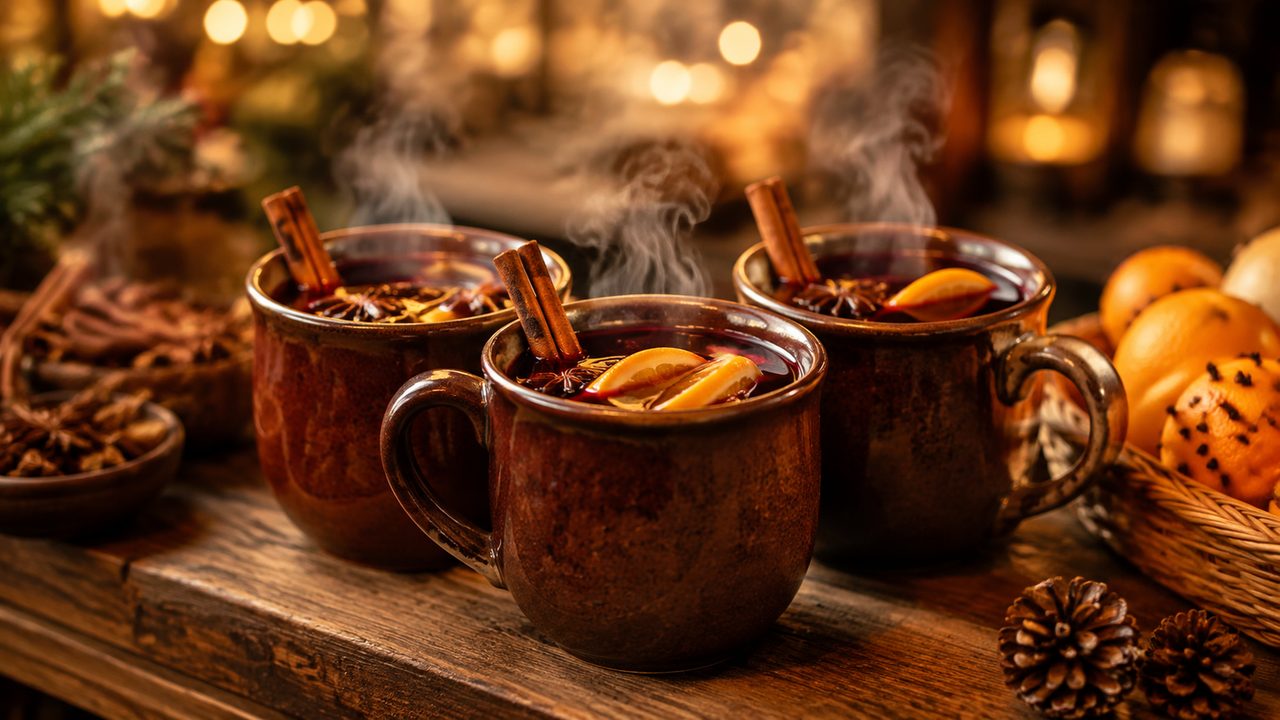
Glühwein costs €4 to €5 at most markets, deposit included on the decorated mug. "Mit Schuss" adds a shot of rum, amaretto or cherry liqueur for about a euro. Kinderpunsch, the non-alcoholic mulled juice, is the children's standard and is served in the same mugs. The showman's option is Feuerzangenbowle: a rum-soaked sugar loaf set alight and melted into a pot of mulled wine. It is sweet, strong and worth the queue once.
Where to eat
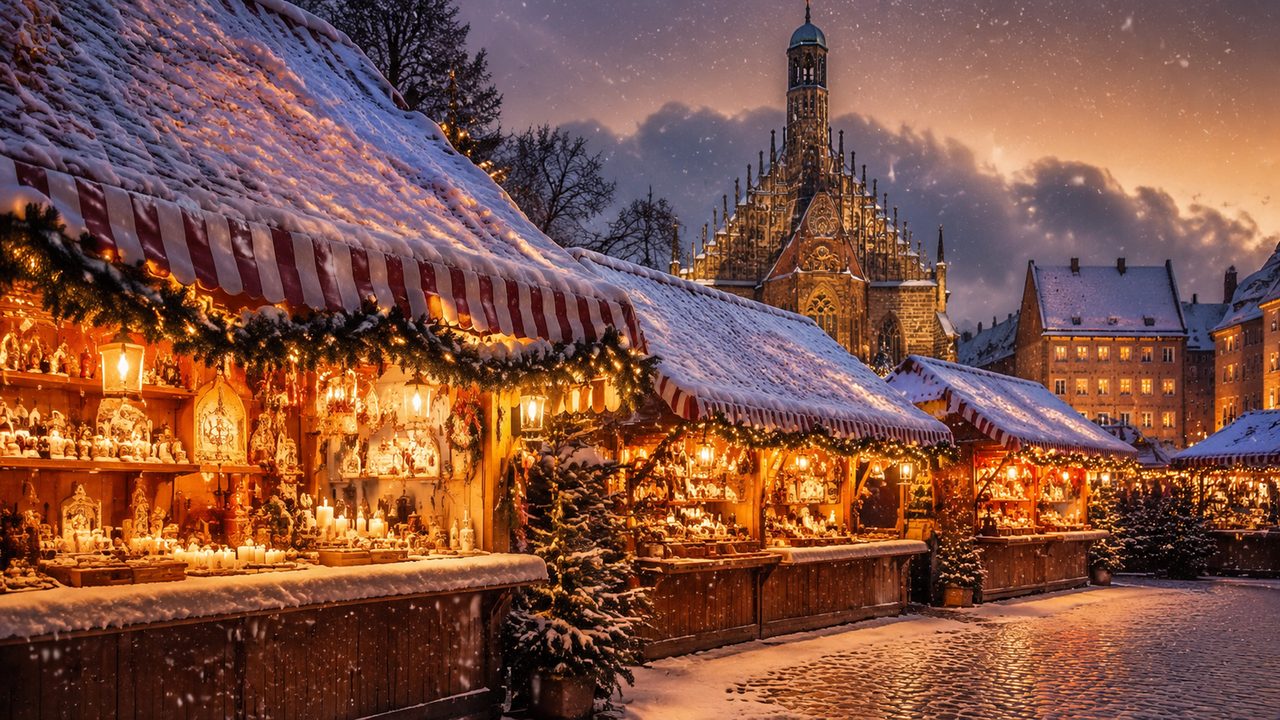
If you are choosing by food: Nuremberg's Hauptmarkt for bratwurst and Lebkuchen; Dresden's Striezelmarkt for Stollen; Munich's Christkindlmarkt at Marienplatz for Bavarian comfort food; Cologne's twin markets at Heumarkt and Neumarkt for the widest choice in Germany; Stuttgart for the southwest's take on everything above. The markets in the south tend to use more local produce, which you notice in the mushroom stalls and the cheese.
Timing matters as much as the stall. Eat early or late — between 5pm and 8pm every food stand in Germany has a queue, and the stands with actual seating fill up first. A market dinner of three shared snacks and two mugs of Glühwein is the correct portion: treat it as a meal and it is a very good one.
Vegetarian and family notes
Vegetarians eat better at German markets than almost anywhere else in Europe: Kartoffelpuffer, flammkuchen ordered without bacon, garlic mushrooms, and Raclette — melted cheese scraped onto bread — which has become a northern market staple. Children live on Kinderpunsch, Schmalzkuchen and caramelised almonds, and every market has at least one sweet stand that will give them the slightly burnt bag with a wink.