On this page
Why Nuremberg sets the standard
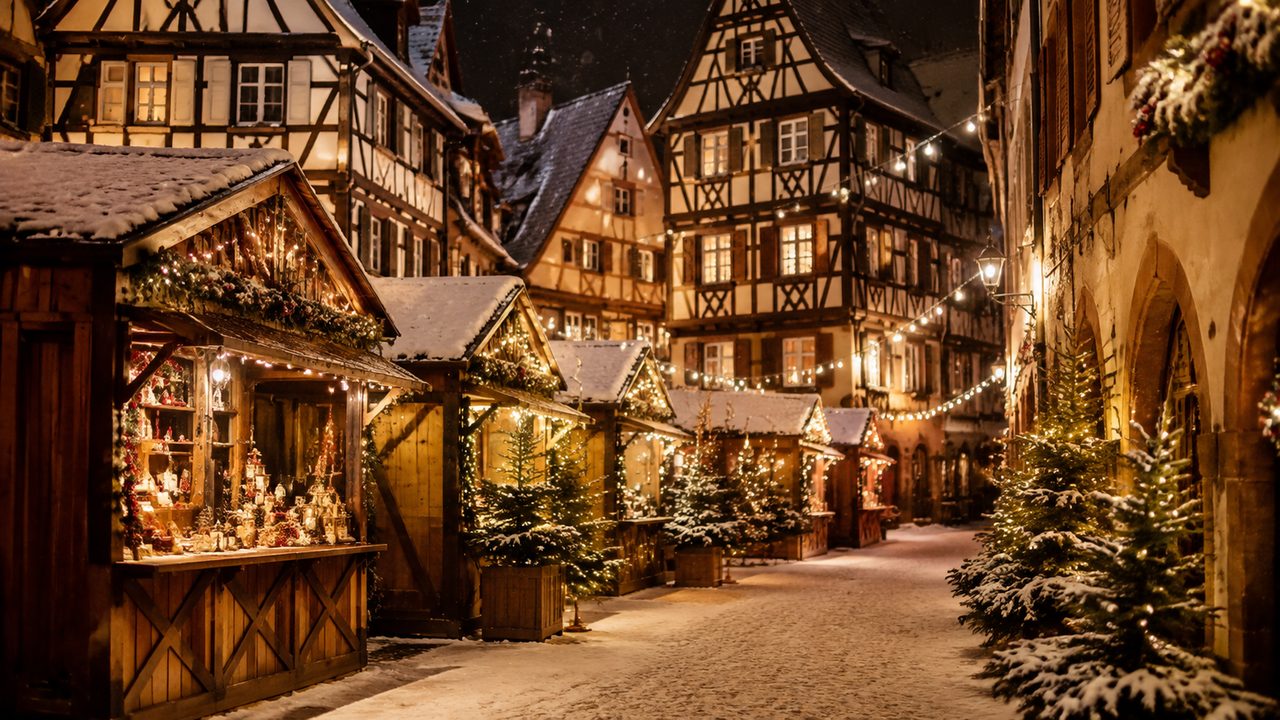
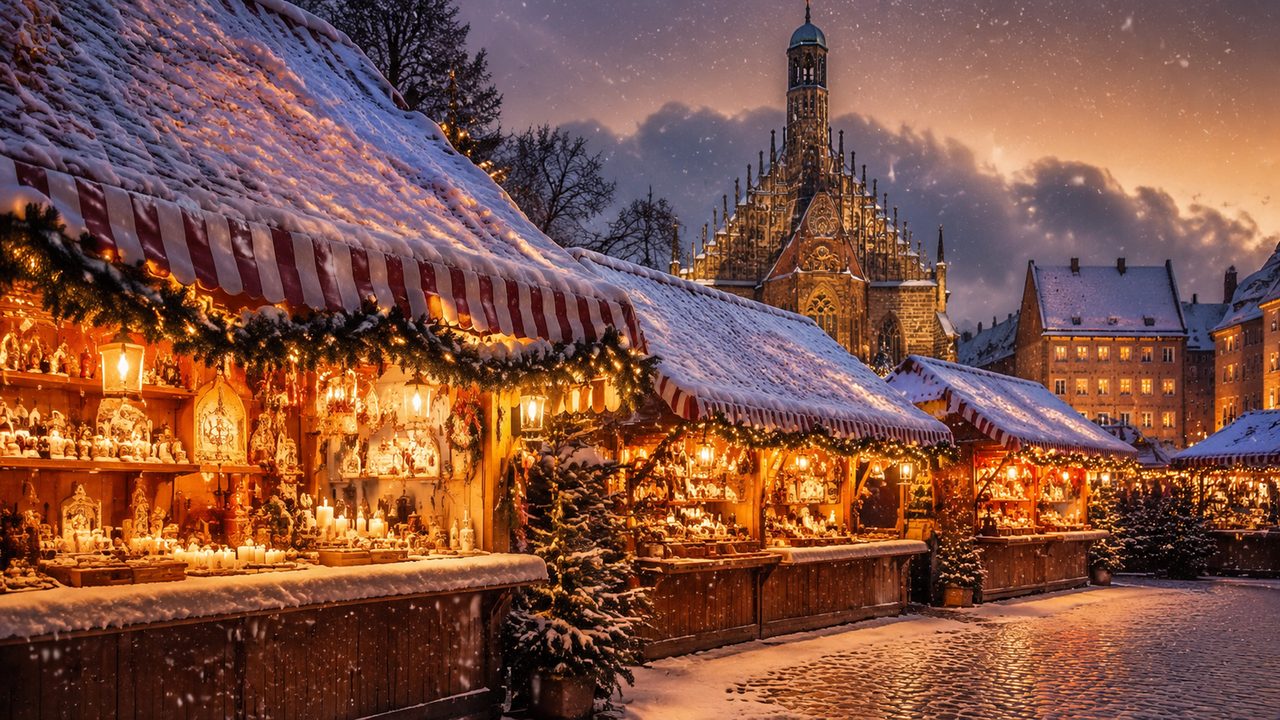
Walk into the Hauptmarkt on a December evening and you will understand why every other city claims its market is "like Nuremberg". The comparison flatters them and slightly misleads you. Nuremberg's Christkindlesmarkt is not the biggest market in Germany — Cologne and Stuttgart both field more stalls — but it is the most disciplined. The roughly 180 stalls must sell handcrafted goods; mass-produced plastic ornaments are refused at application stage. The booths are uniform wooden huts painted red and white, with a few hundred strings of lights over a medieval square.
The market has been held here since at least the early 1600s, and the city's rules keep it recognisably old. Market officials patrol with the power to send a stall home if its wares break the originality rule. You will still find tourist trinkets — this is not a museum — but the balance leans heavily toward wooden toys, glass ornaments, candles and hand-painted baubles.
When the market runs
The Christkindlesmarkt opens on the Friday before the first Sunday of Advent and closes on 24 December. In recent seasons that has meant a late-November start — often the last Friday of the month — and a Christmas Eve finish, with stalls shutting early on the final day, usually around 2pm. Regular days run from about 10am to 9pm.
The first week of December is the sweet spot: the whole market is open, the school trips have not started, and the evening crowds are thick but manageable. The two Saturdays before Christmas are a different sport. If your dates are fixed, plan for them; if they are flexible, do not book those weekends.
A route around the Hauptmarkt
Start at the Schöner Brunnen, the 14th-century gothic fountain on the north edge of the square, and spin the golden ring set into its fence — it is supposed to bring luck, and the queue is only two people deep. Then drift clockwise past the stall of the women in white bonnets, the market's unofficial angels, who sell Lebkuchen and small gifts. The focal point is the balcony of the Frauenkirche, where the Christkind appears on opening night to deliver the prologue that officially starts the market; on ordinary evenings, choirs perform from the same balcony.
Do not stop at the first row of stalls. The far end near St. Sebald's church sees fewer tourists, and the stands there — especially the small bakers' booths — are where regulars shop.
What to eat
Bratwurst, obviously. Nuremberg's sausages are famously small — city rules say no longer than about nine centimetres — and the classic order is "Drei im Weggla": three sausages in a crusty roll with mustard, around €4.50. The stalls grill them over beechwood coals, and the queue moves fast enough that it is always worth joining.
For something sweeter, Elisenlebkuchen is the local speciality: a soft, nut-heavy gingerbread, usually sold in round tins. Buy from the specialist bakers rather than the souvenir stands that sell the same name in shrink wrap. Zwetschgenmännle — little figures made of dried prunes and walnuts — are the traditional children's toy and a genuinely good small present.
What to drink
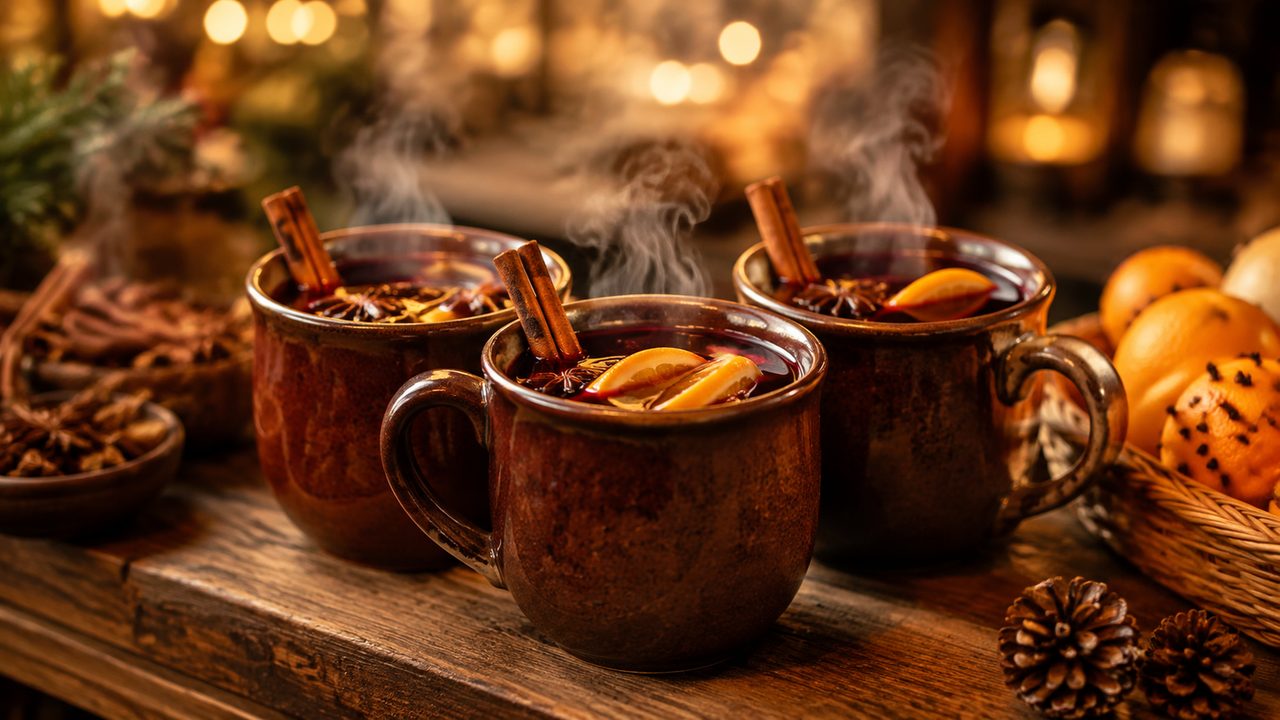
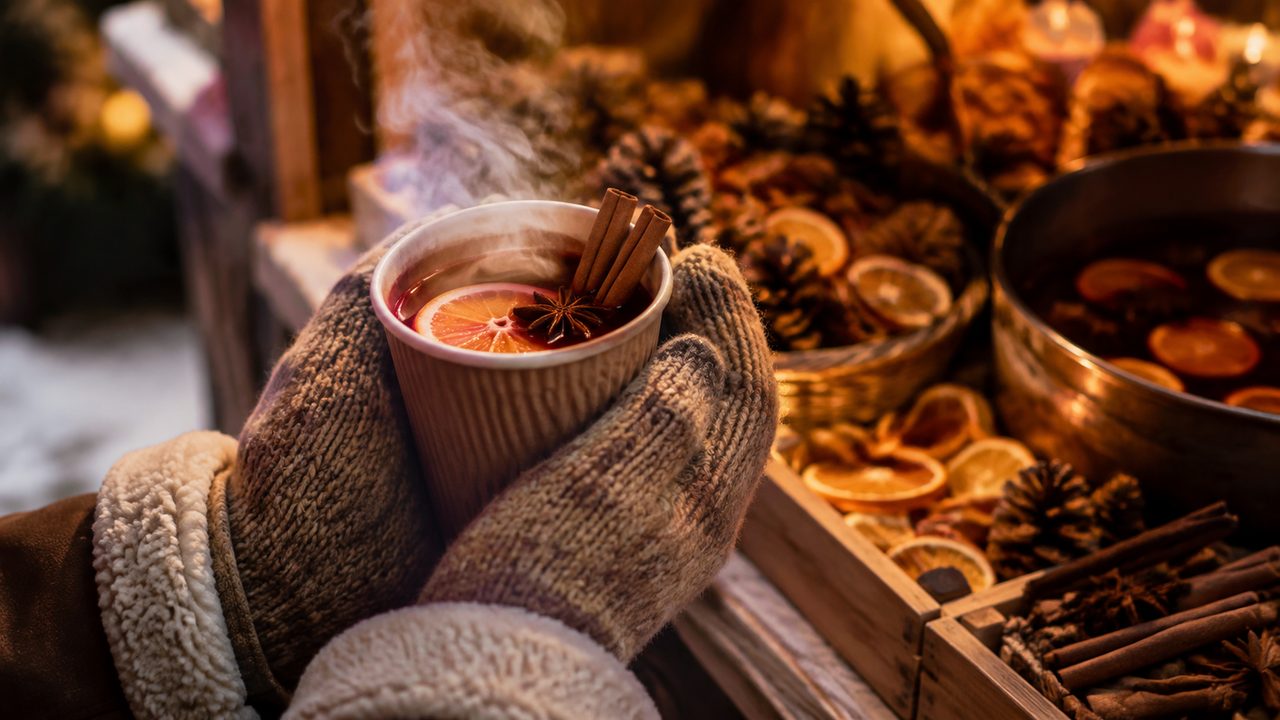
Glühwein here runs about €4 to €4.50, and the price includes a deposit on the ceramic mug. The mugs change design every year; keep one as a souvenir or return it to any stand for the money back. "Mit Schuss" — with a shot of rum, amaretto or similar — adds about a euro and is the local way to stretch the evening comfortably. Kinderpunsch, the non-alcoholic mulled juice, is served everywhere and is every bit as good as the grown-up version.
Beyond the main square
The main market is only half the story. The Kinderweihnacht, a separate children's market with a merry-go-round and a puppet theatre, sits a street away at Hans-Sachs-Platz. The pedestrian zone around it is strung with lights and lined with small shops selling ornaments, candles and winter clothes. The whole old town becomes the "Christmas City" in December, with the market spilling into arcades and courtyards that most visitors never find.
The practical stuff
Most stalls take cash; bring small notes, since a €50 bill at a €4.50 sausage stand gets you a look. ATMs are plentiful around the Hauptmarkt. Market toilets cost about a euro. Wear boots with grip — the cobblestones get slippery — and go at 10am for photographs without crowds or after 8pm when the lights do the work and the queues shorten. Finally, check the official Nuremberg tourism site before you travel: opening hours on the final days change every year, and nothing is worse than arriving on 24 December at 3pm.