On this page
The first markets
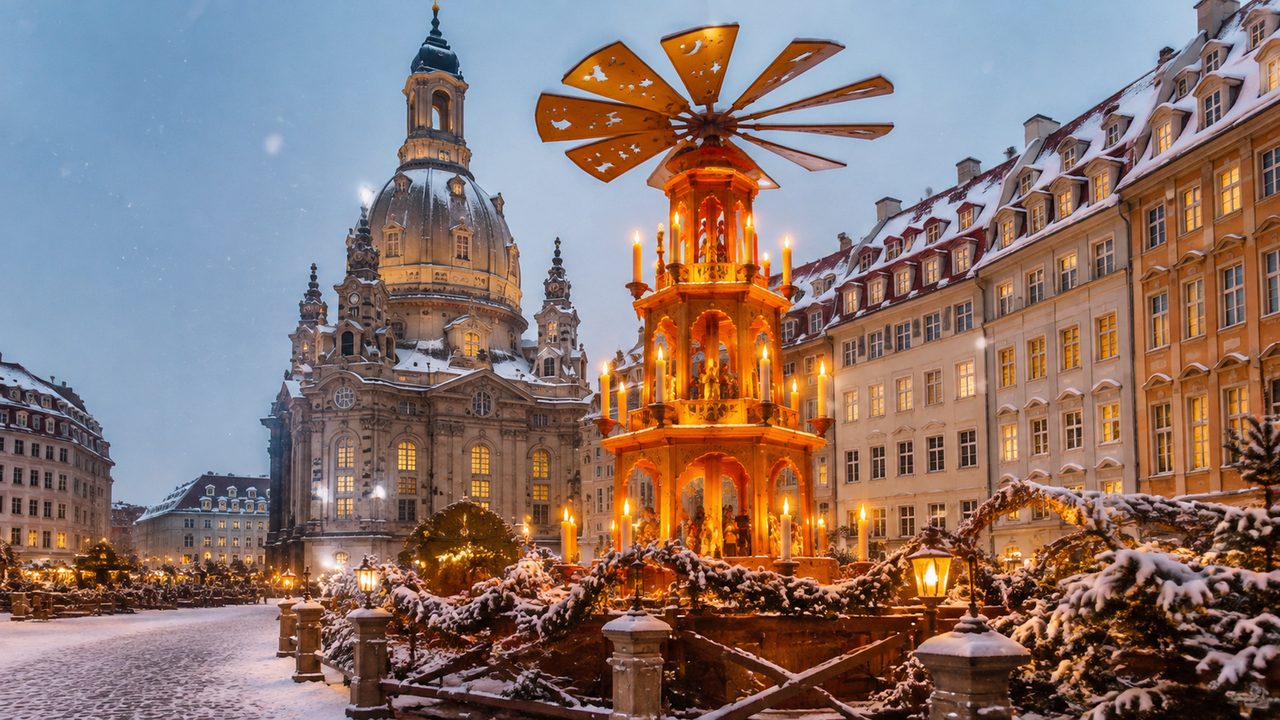
The earliest Christmas markets were not invented — they evolved from the December fairs that medieval towns already held. Dresden's Striezelmarkt is the famous example, first documented in 1434 as a market for the fruit bread called Striezel; Bautzen has an even older claim from 1384. By the standards of a modern December, those early fairs were modest — a row of stalls, a few weeks of trading and none of the lights — but the combination of winter, commerce and celebration was already there. The pattern was the same across central Europe: a town granted the right to hold a winter market, held in the weeks around Advent, selling food, winter goods and the small crafts of the season.
Why they started
The original purpose was practical. A December market was a chance to stock up before the deep winter, when roads froze and supplies thinned — the meat, bread, candles and firewood sold at the fairs were provisions, not presents. Over time the market took on the saint of the season: St Nicholas, whose feast day falls on 6 December, gave children's gifts a place in the fair. The shift from provisioning to celebrating was gradual, but by the 16th century the December market was already a social event, not just a supply run.
The Reformation and the Christkind
The Reformation changed the market's character. Protestant towns in Germany, uncomfortable with the Catholic saint, replaced St Nicholas with the Christkind — a figure of the Christ Child, often played by a girl in white — and the gift-giving moved closer to Christmas itself. Strasbourg's Christkindelsmärik, documented by 1570, was one of the first markets to carry the new name. The Christkind tradition survives to this day, most visibly in Nuremberg, where a costumed Christkind opens the market each year from the balcony of the Frauenkirche.
The 19th century
The 19th century made the market romantic. As Christmas became the family holiday of the Victorian era, the market became its public face — a place of toys, ornaments, gingerbread and the emerging craft industries of towns like Nuremberg and the Erzgebirge, whose wooden pyramids and nutcrackers found a national market. Cities began to plan the market as an event, decorating the squares and extending the season. By 1900 the Christmas market looked recognisably modern: a decorated tree, rows of stalls, and the smell of roasting nuts in a medieval square.
Wars and revival
The 20th century broke the tradition twice. Both world wars suspended or shrank the markets, and in the post-war years many German cities had no energy for festive fairs. The revival began in the 1960s and accelerated through the 1970s, when cities across West Germany and Austria rebuilt their markets as deliberate tourist attractions — Nuremberg formalised its market rules, Vienna built the Christkindlmarkt at Rathausplatz, and the Christmas market became an export. By the 1990s the model had crossed borders to France, the UK and beyond.
The modern market
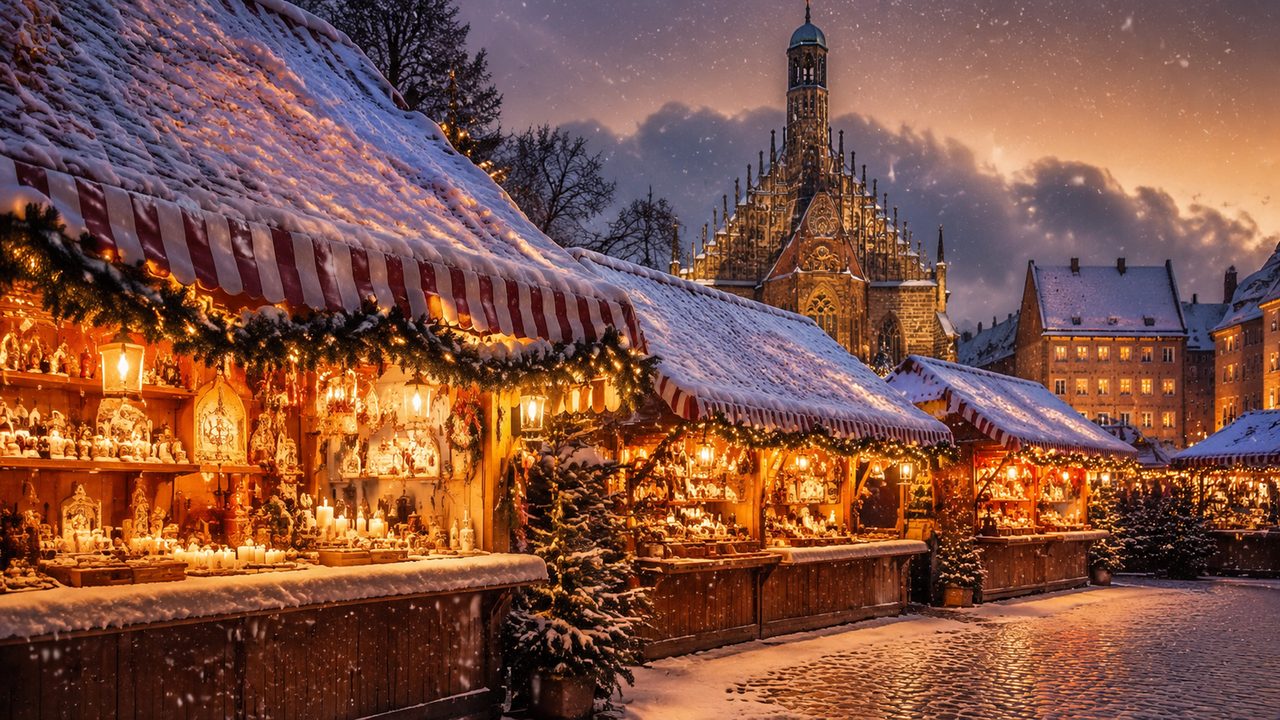
Today's Christmas market is a global formula with local costumes: a decorated square, a tree, wooden stalls, mulled wine and the souvenir mug. The 2000s saw the boom — Brussels' Winter Wonders began in 2000, Birmingham's Frankfurt market in 2001 — and the tradition that began as a provisioning fair now runs from late November to early January, draws millions of visitors, and is as much about lights and atmosphere as about goods. The stallholders still sell the same categories as their 15th-century predecessors: food, drink, crafts and gifts. Only the scale has changed.