On this page
Five markets, one cathedral
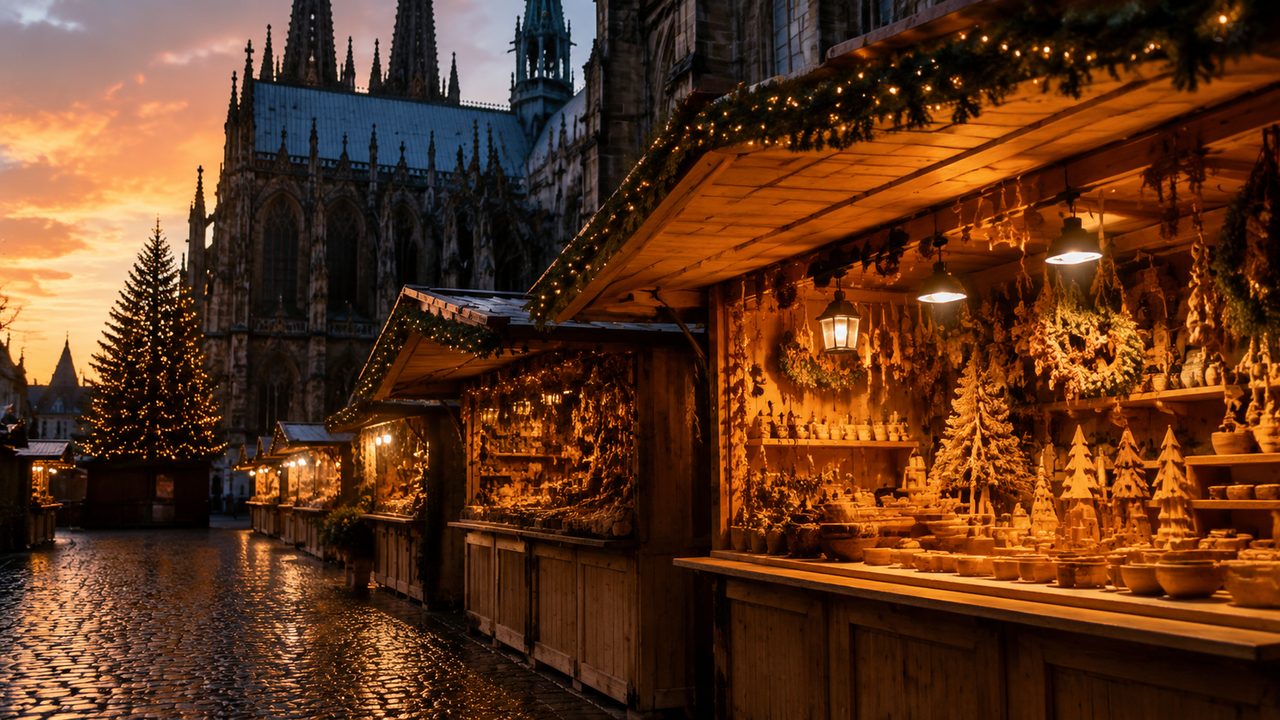
Cologne's answer to the Christmas market is not a single square but a loose federation of five. Each one has a name, a theme and a regular crowd, and they sit close enough that you can walk the whole circuit in an afternoon. The cathedral marks the start. From Roncalliplatz you can see the twin towers of the Kölner Dom against the floodlights, and below them the market that every photographer spends December trying to capture without tourists in the frame.
The beauty of the setup is that you can treat it like a walking tour: cathedral steps, then the big shopping square, then two markets along the Rhine, then the quiet one in the park. If you only visit one, make it the first; if you have an evening, do the circuit.
The Cathedral market: Markt der Engel
The official name is the Markt der Engel — the Angel Market — and it fills Roncalliplatz and the cathedral forecourt with around a hundred stalls selling ornaments, candles, glass baubles and gifts you would actually carry home. The palette is white and gold, and angels appear in wood, ceramic and gingerbread. Go at opening time and you will have the square to yourself; go after dark and the facade of the Dom becomes the backdrop of the most theatrical market in the city.
This is the market for atmosphere rather than bargains. The stands closest to the cathedral steps carry the highest prices; the same mulled wine costs a little less two rows back.
Neumarkt's Angel Market
A ten-minute walk south, Neumarkt hosts the city's largest market, which is also angel-themed — Cologne takes its Engel seriously. More than a hundred stalls ring the square in front of the shopping district, and on weekends the crowd is dense enough to make movement an event in itself. There is a carousel for children, mulled wine stands every few metres, and the longest queue usually forms at the stall selling warm waffles with cherries. Note the mug design here: it is different from the one at the cathedral, and collectors treat them like a set.
Alter Markt and Heumarkt
Back toward the river, two adjacent squares split the theme between them. Heumarkt runs a harbour-and-sailor market with lanterns and blue-white lights, a nod to the Rhine trade that built the city; Alter Markt goes medieval, with food booths and the legend of the Heinzelmännchen, the little house-elves who supposedly did Cologne's chores at night until a tailor's wife spied on them and they vanished. Children love the story, and the market sells plenty of elf figures to go with it.
Rudolfplatz and Stadtgarten
The fairy-tale village at Rudolfplatz is smaller and calmer, with a gingerbread-house feel and fewer tour groups. For the opposite end of the scale, the market at Stadtgarten, in the park southwest of the ring road, is the one locals recommend when they want to buy presents without the scrum. It is quieter, its stalls skew toward local crafts and food producers, and the walk back through the park is pleasant even in December.
The chocolate detour
No visit to Cologne's Christmas markets is complete without the chocolate. The Imhoff-Schokoladenmuseum sits on the Rheinauhafen peninsula, a ten-minute riverside walk from the cathedral; its glass factory room shows chocolate being made, and the tasting fountain is the museum's most popular stop. The museum café's hot chocolate is thick enough to qualify as dessert, and the shop sells local bars that make far better gifts than the plastic trinkets at the market. Combine the cathedral market with the museum in one afternoon and you have the city's two best winter experiences.
Practical notes
The markets open around the Friday before the first Sunday of Advent and run until 23 December in recent seasons; the 2024 season was 27 November to 23 December, with most stalls open from 11am to 9pm. Glühwein costs about €4.50 to €5 including a deposit on the mug, with €3 to €5 back when you return it, and a sausage in a roll runs €4 to €6. Cologne's Kölsch is cheaper at a brewery than at the market, so drink beer there and wine here. Take cash and small notes, aim for weekday mornings, and expect the two Saturdays before Christmas to be the busiest days of the season.