On this page
The Copenhagen approach
Copenhagen has no single medieval square to fill, so it does Christmas differently. Instead of one big market, the city scatters a dozen smaller ones — in a theme park, a former meatpacking district, a brewery quarter and along the old canal. The result is a Christmas scene you explore neighbourhood by neighbourhood rather than square by square. It is less storybook than Germany's version and, for my money, more fun to wander.
Tivoli, the blockbuster
Start at Tivoli Gardens, the 19th-century amusement park in the centre of the city, which becomes a Christmas market from mid-November to early January. Around sixty market stalls ring the lake and the paths, the park's trees are hung with thousands of lights, and Santa runs a post office where children can post letters. There is an ice rink, a train through the trees, and a tunnel of lights that the whole city comes to photograph.
Tivoli is expensive — it charges admission on top of what you spend inside — and it is worth it once, on a weekday evening when the school-holiday crowds are smaller. Go for the lights and the gløgg, not for bargains.
Kødbyen, the meatpacking district
The alternative scene lives in Kødbyen, the old meatpacking quarter behind the central station. In recent years it has hosted a design-led Christmas market inside the industrial halls: craft stalls, ceramics, DJs, natural wine and street food, with no carols and no Santas. This is Copenhagen Christmas for people who would rather have a craft beer and a paper cone of chips than a singalong. The dates are shorter than the main markets, so check the programme before building the evening around it.
Nyhavn and Højbro Plads
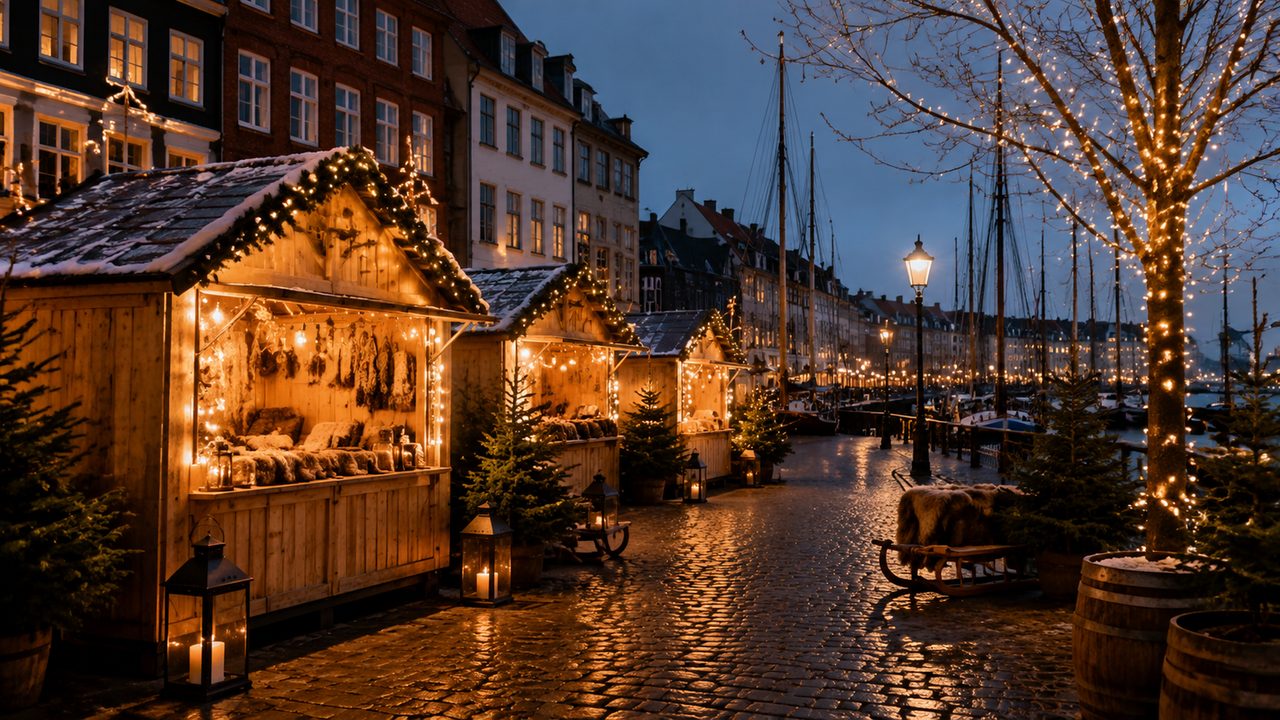
For the postcard version, the stalls along Nyhavn's canal — the famous waterfront of coloured houses — string up lights and sell mulled wine, hot chocolate and roasted almonds to the crowd on the quay. It is tiny, charming and packed; you see it in twenty minutes. A short walk inland, Højbro Plads, off the pedestrian street Strøget, holds a more traditional market of food and craft stalls where the locals actually do their present shopping.
Carlsberg Byen and the brewery quarter
The old Carlsberg brewery district, around the historic brewhouse and the Elephant Gate, hosts a calmer Christmas market in the weeks before Christmas. It skews local: fewer tourists, more stalls selling design, ceramics and beer, and a proper indoor space when the Danish weather turns. The brewery halls themselves are worth a look even without the market.
What to drink and eat
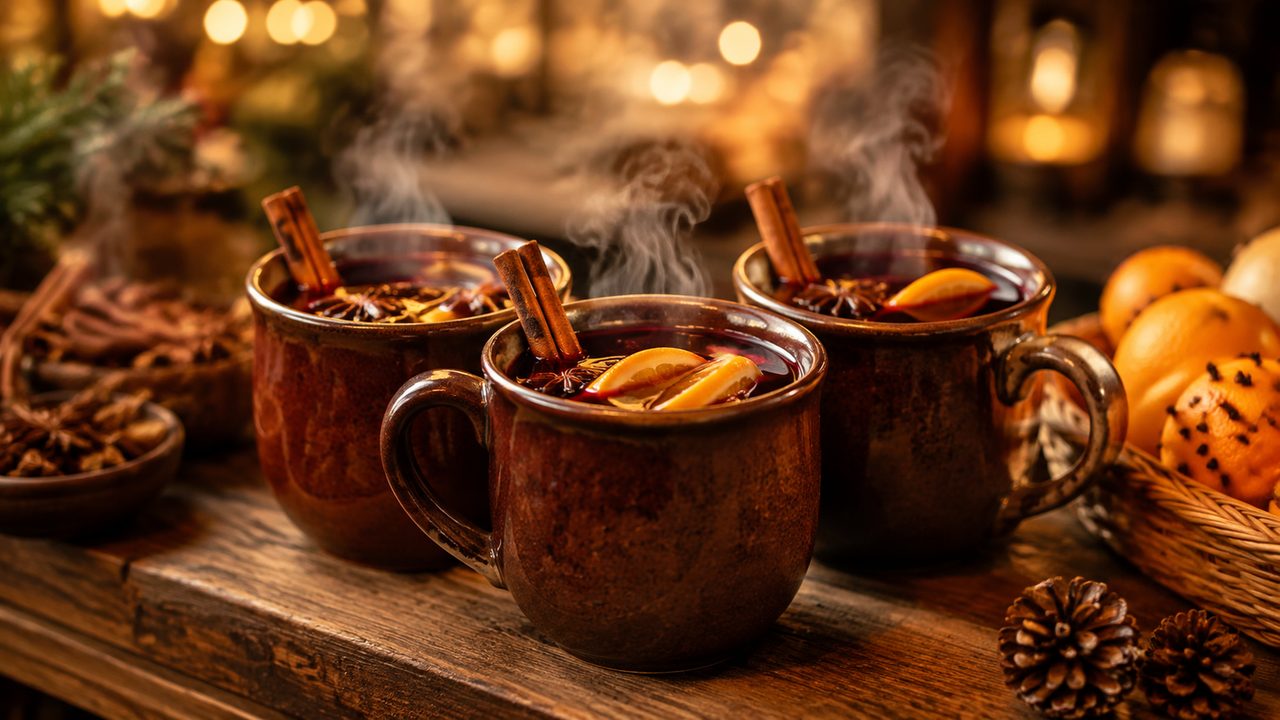
Danish gløgg is the drink — mulled wine with almonds and raisins, cardamom and cloves, served with a spoon so you can eat the fruit at the bottom. The ritual is gløgg with æbleskiver: round pancake balls served with jam and icing sugar, eaten with a skewer while the mug warms your hands. Brændte mandler, caramelised almonds, and proper hot chocolate fill the gaps between stalls. Prices run higher than in Germany — gløgg is often DKK 60 to 80 — and card is the norm everywhere, which makes the cash habit from southern markets unnecessary.
Practical notes
The street markets run roughly from late November to 23 December, with Tivoli continuing past the new year. Opening hours vary by site, so check each event's own page. Dress for wind: Copenhagen's cold comes off the water, and layers matter more than one heavy coat. And plan by neighbourhood — the city is compact, but the markets are spread out, and a bus or a bike between them beats a long walk in the dark.