On this page
Glühwein (Germany): the benchmark
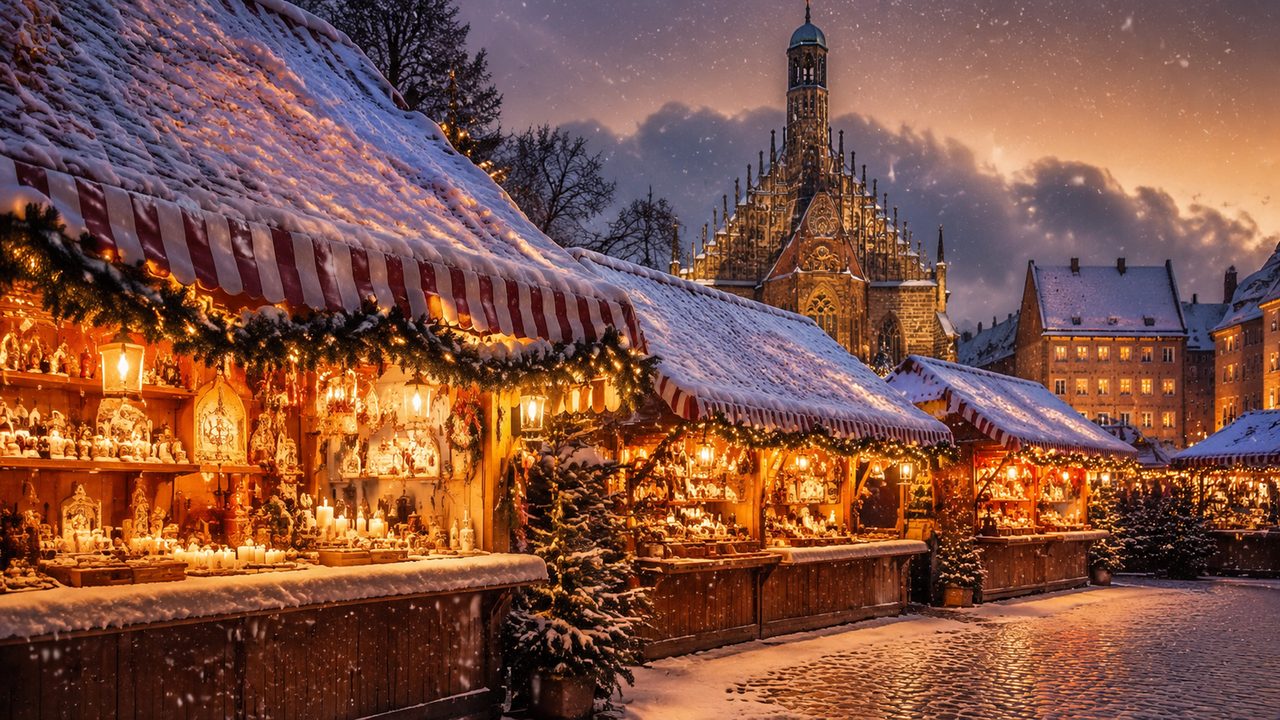
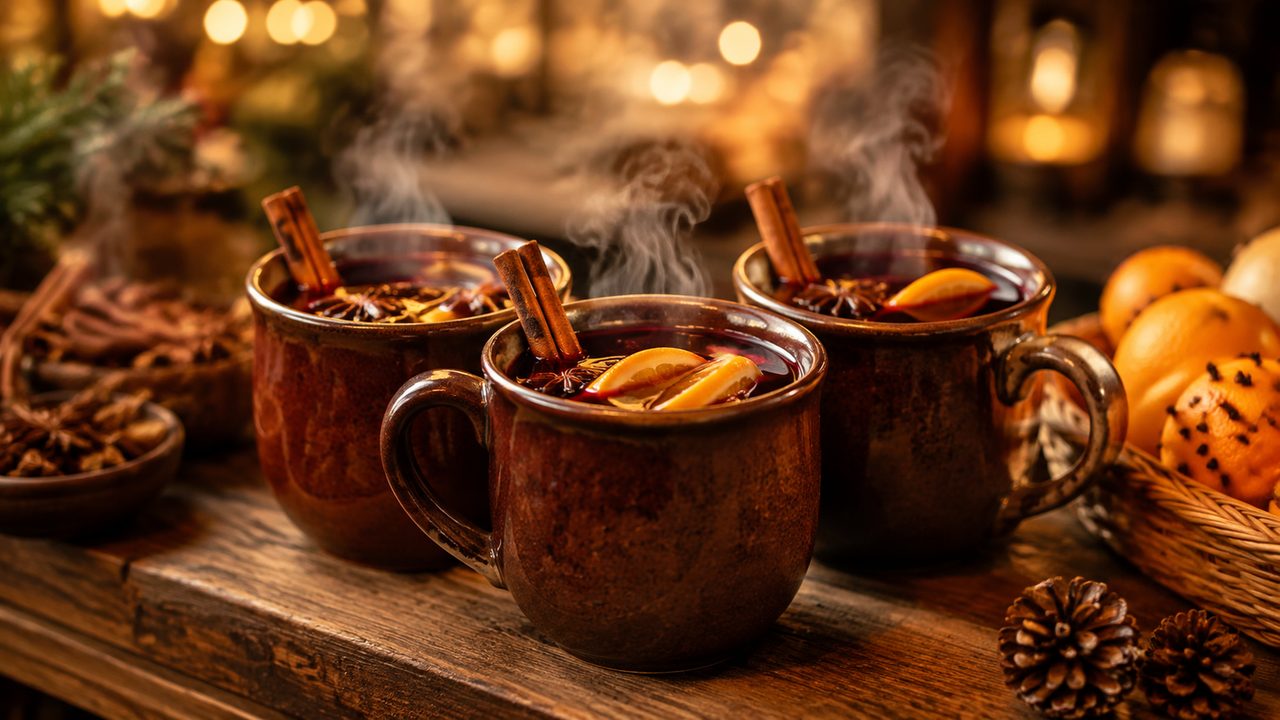
Start with the standard. German Glühwein is red wine heated with cloves, cinnamon and orange peel, served at Nuremberg's Hauptmarkt, Cologne's Heumarkt, Munich's Marienplatz and a thousand squares in between. The drink comes in a decorated mug that changes design every year, and the price — €4 to €5 at most markets — includes a deposit on that mug. Order "mit Schuss" and the stall adds a shot of rum, amaretto or cherry liqueur for about a euro. Cologne's big markets pour thousands of cups an evening; the Heumarkt stands with the longest queues are usually the ones using actual wine rather than a bottled base.
Punsch (Austria): the sweeter cousin
Vienna's Punsch is often not wine at all. The base is a fruit wine or juice — orange, cherry or berry — warmed with rum and spices, which makes it sweeter, more perfumed and a little stronger than Glühwein. The Kaiserkirsche, imperial cherry, is the classic order at the Rathausplatz market. Austrian mugs are designed rather than branded, and the deposit system works the same way. If a market offers Punsch "mit Schlag", that is whipped cream on top — and yes, it works.
Vin chaud (France and Alsace): orange and star anise
Strasbourg's vin chaud is red wine simmered with orange peel, star anise, cinnamon and often honey, served with a slice of orange in the cup. The star anise gives it a warmer, spicier profile than the German version. Alsatian markets also pour a white version, vin chaud blanc, made with the local Riesling or Pinot Blanc, which is lighter and dangerously easy to drink. Prices run €4 to €5 with the deposit on a small ceramic cup.
Gløgg (Denmark): with almonds and raisins
Danish gløgg is the richest of the five: red wine or spirits mulled with cardamom, cloves and orange, then finished with blanched almonds and raisins that sit in the bottom of the mug. It is served with a spoon so you can fish out the fruit and nuts. At Copenhagen's Tivoli and the Nyhavn stalls, gløgg comes with æbleskiver — round pancake balls with jam and icing sugar — and the combination is the whole point. The non-alcoholic version is common and genuinely good.
Central Europe: svařák, forralt bor, grzaniec
The eastern capitals have their own dialects. Prague's svařák is red wine with honey or sugar, cloves and cinnamon, often boosted with rum; the stands on the Old Town Square pour it from early evening. Budapest's forralt bor leans heavily on cinnamon and cloves, and the Vörösmarty Square market adds a shot of the local fruit brandy if you ask. Kraków throws the curveball: grzaniec galicyjski is mulled beer with honey, cloves and ginger, a Galician speciality that the market pours alongside the wine version, grzaniec na winie. Try both before deciding.
Vin brulé (Italy): small cups, no ceremony
In Bolzano and Merano, the drink is vin brulé — red wine with orange zest, cinnamon and cloves, sometimes a splash of grappa, served in small glasses rather than mugs. The markets in the South Tyrolean towns pour it from late November, and the smaller cups mean the spice hits faster. Bolzano's Piazza Walther market, started in the 1990s, is the best place to compare it with the German tradition an hour up the road.
How to order like a local
The rules are the same everywhere: the mug is part of the price, so either collect the deposit or keep the mug; "ohne Alkohol" gets you the children's version; "mit Schuss" adds a shot; and return mugs to the stand that issued them, though most stalls will take any mug back. Prices across Europe run €3.50 to €6. The mugs are the real souvenir — every city and every year has a different design, and a shelf of them is the cheapest way to remember the trip.