On this page
One word, many cookies
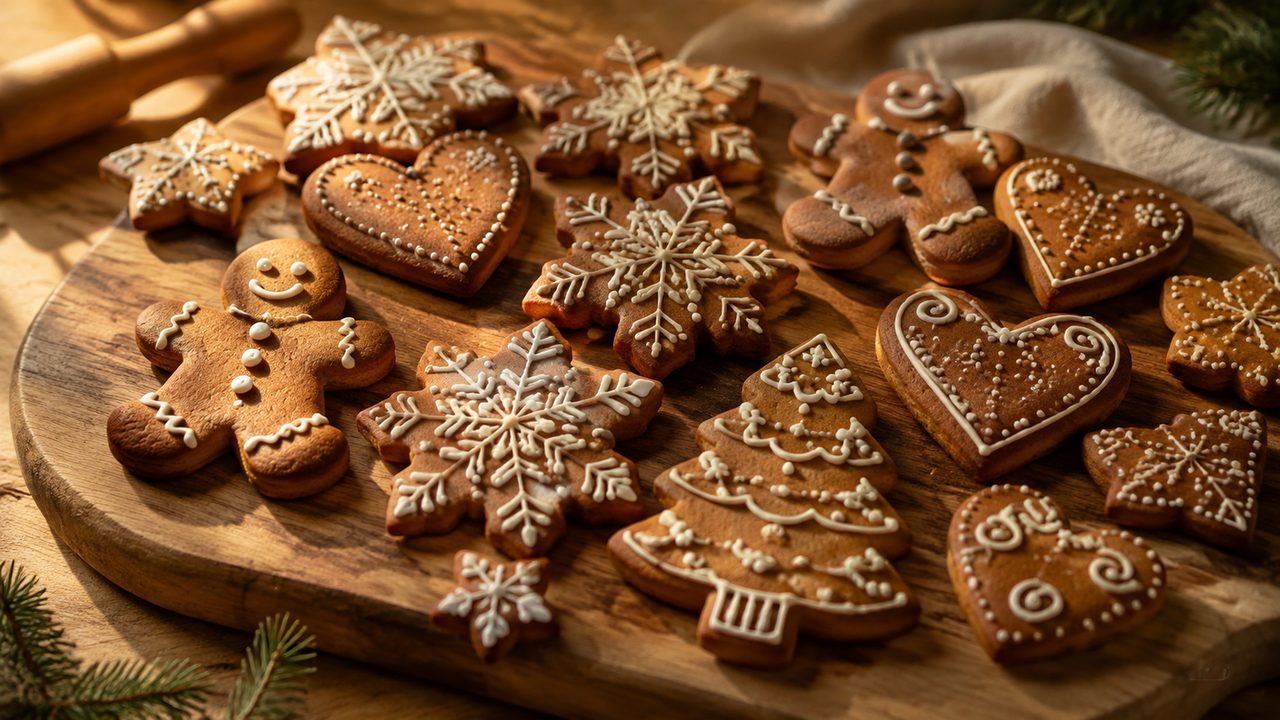
The English word "gingerbread" does a lot of work. Across Europe it covers anything from a cake the size of your palm to a wafer-thin biscuit, unified mainly by the spices: ginger, cinnamon, cloves, nutmeg and cardamom in various combinations. The differences matter when you buy, because the best versions of each tradition are rarely the same product under a different name. A German Lebkuchen and a Dutch speculaas both get called gingerbread in translation, but they have different textures, different leavenings and different occasions.
Nuremberg's Elisenlebkuchen
The German heavyweight is the Elisenlebkuchen of Nuremberg, a soft, domed cookie that is more nut than flour. The protected recipe leans on hazelnuts and almonds, sometimes with a little flour or none at all, bound with honey and spiced lightly, then finished with a sugar glaze, chocolate or a single blanched almond on top. Good Elisenlebkuchen stay moist for weeks, which is why they are sold in round tins and keep so well as gifts. The name comes from a legend about a baker's daughter, Elise, who is said to have been cured by the recipe in the 1720s — a story the Nuremberg bakers tell, and the souvenir stands repeat, with varying confidence.
Dutch speculaas
Dutch speculaas is the opposite in texture: a crisp, brown biscuit pressed from a wooden mould, so you buy it shaped like windmills, ships or the saint of the season. The spice mix — speculaaskruiden — combines cinnamon with white pepper, cloves, nutmeg and cardamom, and the biscuits are traditionally baked for Sinterklaas on 5 December rather than for Christmas itself. The small, round, spice-heavy version is pepernoten, which Dutch children scatter for the saint's horse and adults eat by the handful. If you want to feel the difference between the traditions, bite a crisp speculaas straight after a soft Lebkuchen; the contrast is the point.
Russian pryaniki
Russian pryaniki are honey-sweetened cookies, often glazed with a sugar icing and sometimes printed with a picture or a slogan pressed into the dough before baking. The classic centre of production is Tula, south of Moscow, where the cookies have been made since the 17th century and are sold with jam or condensed-milk fillings; the heart-shaped printed ones are the souvenir standard. The defining note is honey rather than pepper, and the texture sits between the softness of Lebkuchen and the snap of speculaas. Pryaniki appear at winter fairs across Russia and in the Russian sections of big European markets.
Polish pierniki from Toruń
Poland's gingerbread city is Toruń, where pierniki have been baked since at least the 13th century and are so central to local identity that the town museum is a gingerbread museum. The old-style Toruń piernik is a dark, honey-rich cake with a fine crumb and a long shelf life; the modern versions come glazed, chocolate-coated or filled with plum jam. The moulds used for the elaborate old shapes are part of the museum's collection, and the baking workshops are genuinely good fun. If you see pierniki at a Polish market, buy the plain honey kind before the novelty shapes — it is the one that made the town famous.
How to taste them side by side
A useful side-by-side test: buy one Elisenlebkuchen, one speculaas, one pryanik and one piernik, and eat them in that order. You will move from nut and honey to spice and snap, then to glaze and finally to dark cake — four different answers to the same question. For shopping, remember that the best versions are regional: Nuremberg for lebkuchen, the Netherlands for speculaas, Tula or Moscow for pryaniki, Toruń for pierniki. At a market, the stall that sells them loose from a bakery tray is a better bet than the stall selling identical boxes shrink-wrapped for tourists.