On this page
The loaf family tree
The great Christmas loaves share a single trick: a rich yeasted dough, loaded with butter, dried fruit and often marzipan, baked large enough to feed a table. They diverge on everything else — shape, crumb, sweetness and the occasion they belong to. Understanding the family helps you buy well, because the differences are not cosmetic. A Dresden stollen and a Milanese panettone look nothing alike on a plate, and each is best eaten its own way.
Dresden Christstollen
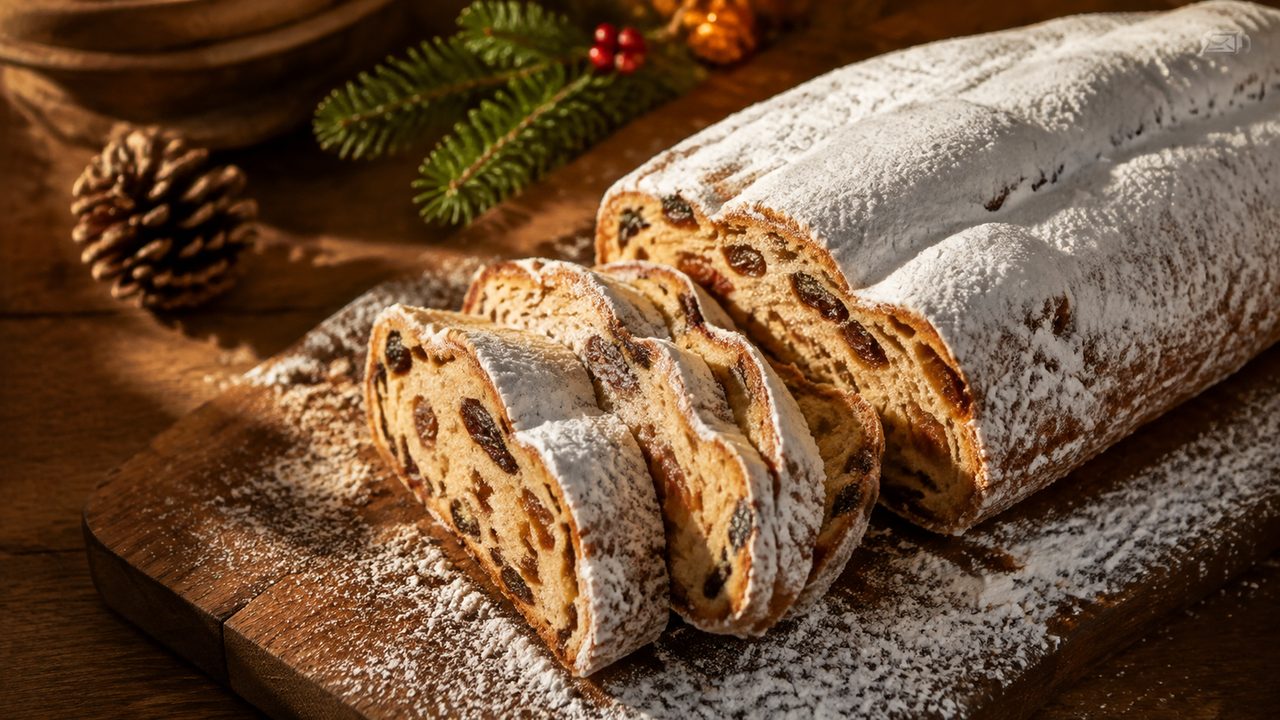
The German member is the Dresden Christstollen, a long, folded loaf that resembles a wrapped parcel, dusted heavily with powdered sugar to suggest snow. The recipe is protected: genuine Dresden stollen carries a seal from the local bakers' association, which polices the butter, fruit, almonds and marzipan content. It is a bread of December, baked early and kept — the older style was made weeks ahead and stored, which is why the loaf keeps so well. A good stollen should be dense but moist, sliced thick, and eaten in a way that lets the butter do its work. Prices at the market run about €8 to €15 for a small loaf, more for the marzipan-loaded versions.
The Striezel and the market
Historically, the Striezel was the simpler predecessor: a yeasted loaf with fruit, sold at Dresden's winter market from the 15th century onward. The name of the Striezelmarkt itself comes from the bread, not the other way around. Over the centuries the Striezel became richer, picked up the "Stollen" name and the marzipan core, and turned from street food into the ceremonial loaf of the season. The modern distinction matters mainly for trivia and for the Stollenfest, Dresden's December parade of a giant stollen — but knowing the lineage explains why the city still treats the loaf as its winter emblem.
Milan's panettone
Panettone is the Italian member, and it is a different animal: a tall, domed loaf with a light, feathery crumb, studded with candied orange and lemon peel and raisins, and usually sold in a box with a paper band. Its origin stories are disputed — the favourite involves a noble family, a baker named Toni and a kitchen accident — but its industrial rise came in the early 20th century, when Milanese bakers scaled it up for the national market. Good panettone is made with a natural starter that takes days, which is why cheap versions taste like sponge cake and expensive ones genuinely melt. It is eaten sliced, often with sweet wine, mascarpone or a coffee, and it improves as it ages a few days.
Pandoro, the golden rival
Verona's answer to panettone is pandoro, a tall, star-sectioned golden loaf made without fruit, brushed with butter and finished at the table with a snowfall of powdered sugar. Where panettone is citrusy and studded, pandoro is plain and rich, closer to a brioche, and it divides Italian households with real feeling. If you see both on a market shelf, the choice is texture versus fruit: pandoro for the buttery plain slice, panettone for the candied peel. Both keep well and both travel, which is why they dominate the gift aisles of Italian markets in December.
How to pick a good one
Three rules apply at any market. First, read the label: the shortest ingredient list wins — flour, butter, eggs, sugar, fruit — and the presence of the Dresden seal or an artisan panettone maker's name is worth the extra cost. Second, buy by weight: a dense, heavy stollen and a panettone that feels substantial for its size are signs of proper butter and fruit content. Third, eat it in its window: stollen improves over weeks, panettone over days, and pandoro is best within a week. Buy from a bakery stall, not a souvenir shelf, and you will taste the difference in the first slice.