On this page
Two warm drinks, very different queues
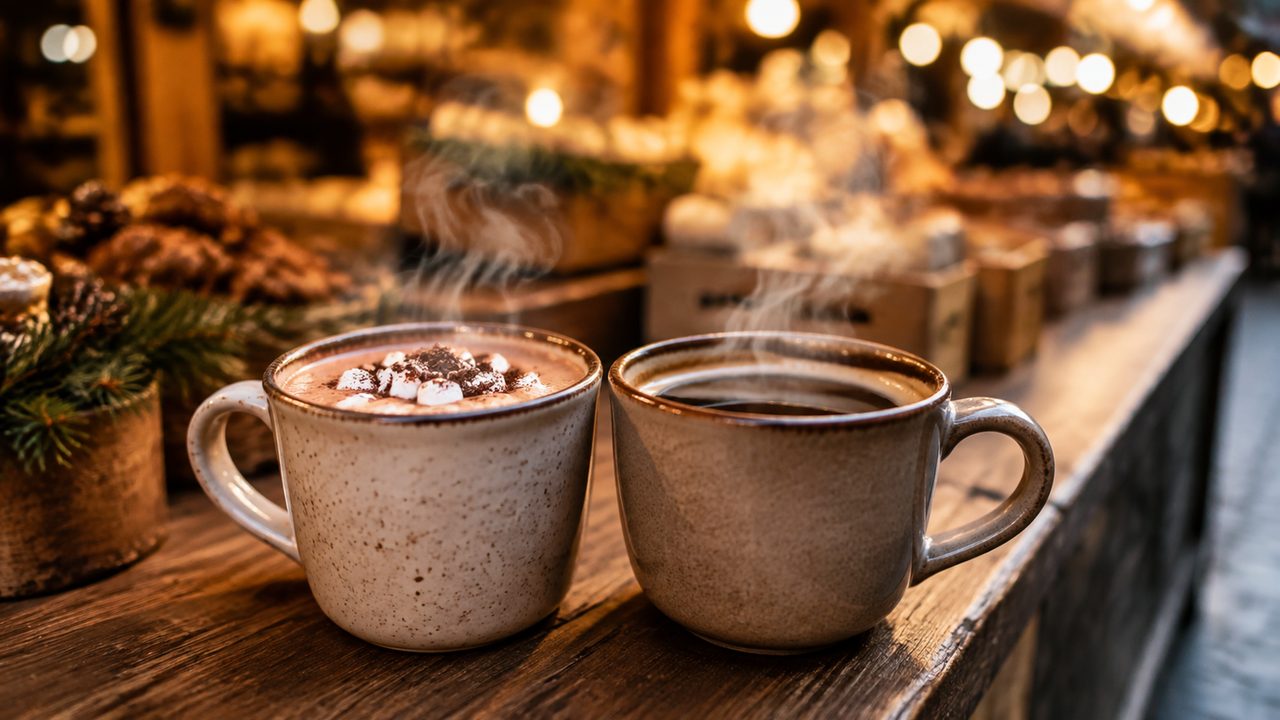
At any Christmas market there are two hot drinks doing completely different jobs. Coffee is fuel: quick, predictable, and best before noon. Hot chocolate is an event: rich, slow and thick enough to count as dessert. The mistake is treating them as interchangeable. They have different queues, different price points and different countries where each is done best, so the choice should follow the market you are standing in.
Where hot chocolate wins
Three countries do hot chocolate well enough to make it the default order. In Vienna, heiße Schokolade arrives in a tall glass, dense and often dark, with a spoon standing in it. In Belgium, the café tradition brings real chocolate — often two squares melted into hot milk at your table — and the market versions follow. In Italy, cioccolata calda is almost a pudding, poured thick enough to coat the cup. In all three, the chocolate is the point of the visit, and the price — roughly €3.50 to €5 — buys something the mulled wine stand cannot match: a genuinely sweet, non-alcoholic warm drink that keeps for the walk.
Where coffee wins
Coffee has its own territory. In Italy and Spain, the espresso bar is a morning ritual, and a market coffee stand that opens at 8am for stallholders will serve you better coffee than any chocolate stall before lunch. In Germany and Austria, filter coffee with milk is the quieter, cheaper alternative to the market's sweet drinks, and it is the right order when you are tired of sugar. The rule of thumb: before noon, coffee; after the lights come on, chocolate. The queues confirm it — the chocolate stands fill up from mid-afternoon, while the espresso bars empty after breakfast.
The mulled wine problem
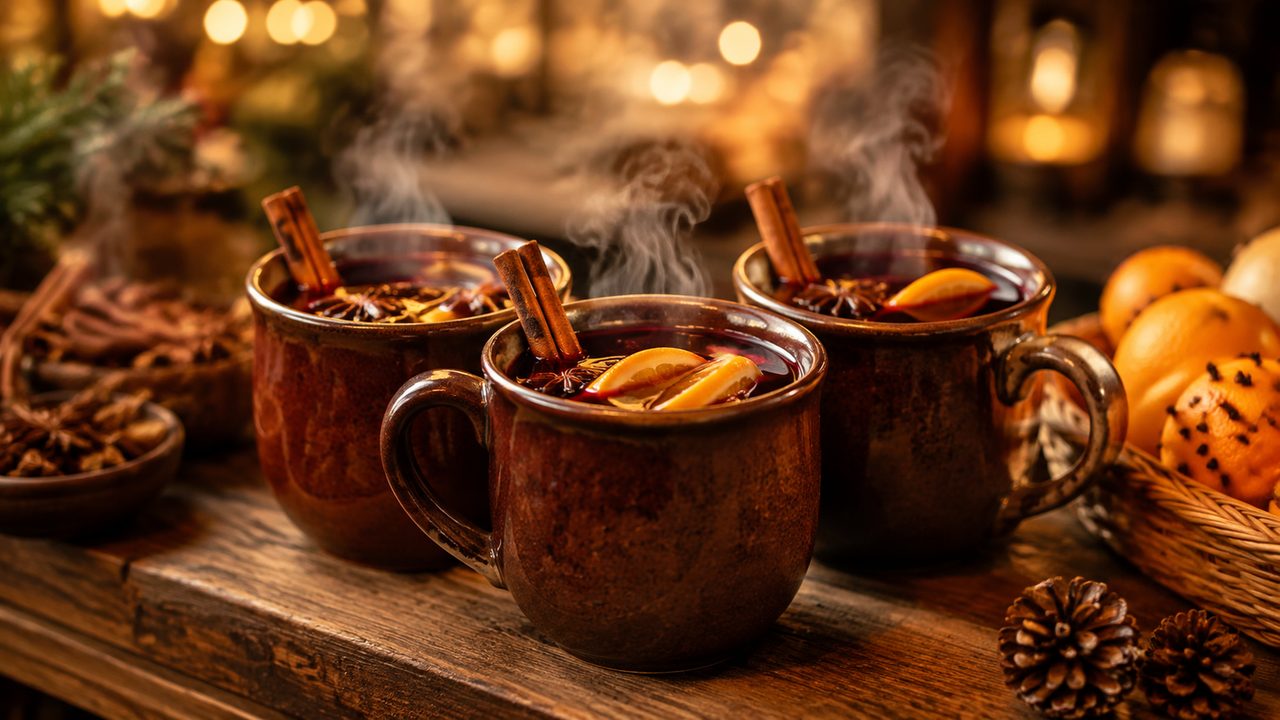
Mulled wine complicates the math. After two Glühwein, the sensible third drink is something non-alcoholic, and hot chocolate is the natural candidate — which is why chocolate stands do their best trade after dark, when the wine drinkers cross over. But there is a catch: the market's hot chocolate is often made from a powder mix, not real chocolate, and the difference is obvious in a sip. If you want the real thing, buy where the Belgian and Viennese traditions hold, or look for a stall with a visible chocolate pot rather than a box of mix. The extra euro is worth it.
How the cup changes things
The container decides how you drink. Market chocolate usually arrives in the same deposit mug as the mulled wine, which keeps it warm for a long walk but makes it a commitment — you carry the cup until you return it. Coffee, by contrast, is served in a paper or cardboard cup at most markets, designed to be finished on the move. If you are shopping, chocolate is a liability and coffee is a convenience. If you are settling by a stall to watch the lights, the mug of chocolate is the better companion. Plan the drink around the activity, not the other way around.
A practical rule
The simplest version: coffee in the morning, chocolate at dusk, mulled wine after dark, and water in between. Match the drink to the country — espresso in Italy, thick chocolate in Belgium and Vienna — and to the queue, because a chocolate stand with a five-minute line is usually fresher than the empty one next door. And on the coldest nights, do what the stallholders do: order chocolate with a shot of rum or amaretto and call it both dessert and heating.