On this page
Why chestnuts, why winter
Roasted chestnuts are one of Europe's oldest street foods, and the reason is simple: the sweet chestnut is a tree crop that ripens in late autumn and keeps well into winter, and it needs no milling or cooking infrastructure to become edible. Before potatoes and maize arrived from the Americas, chestnuts were a genuine staple in the mountain regions of southern Europe — a food of necessity that slowly became a food of the season. By the 19th century, the chestnut roaster with his pan and chimney was a fixed character in the winter streets of Paris, Rome and London.
How the roasting works
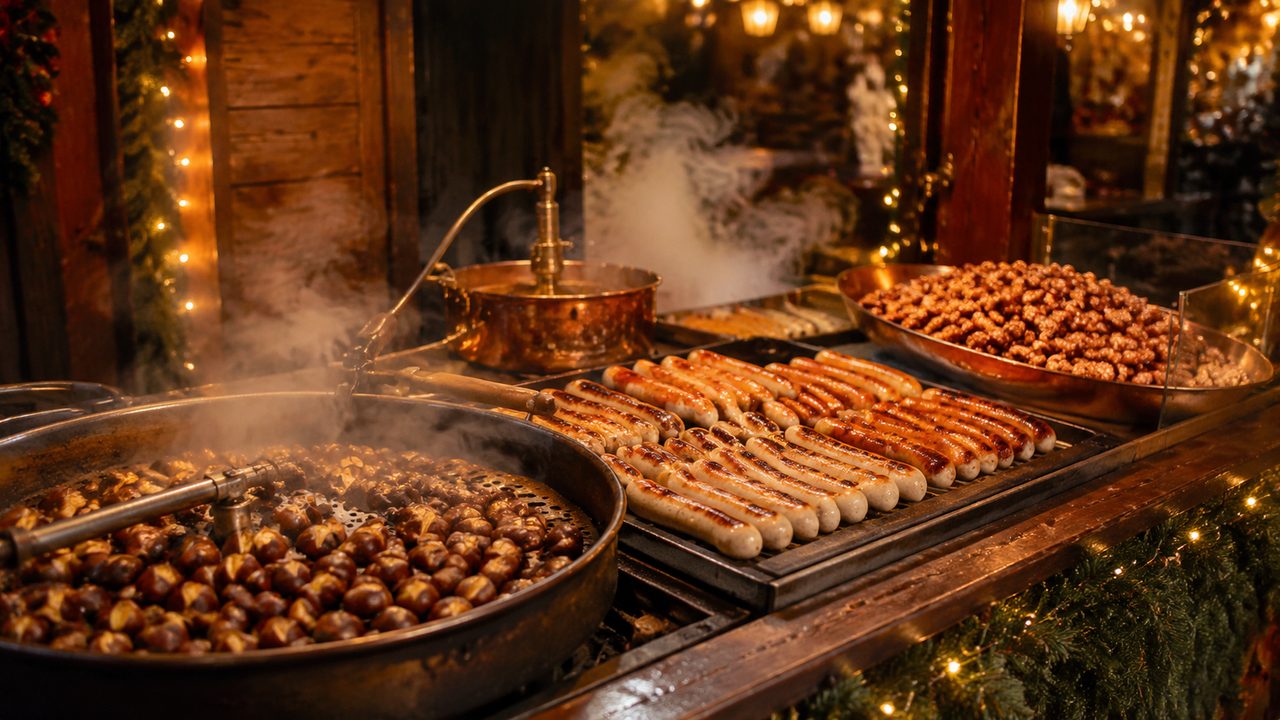
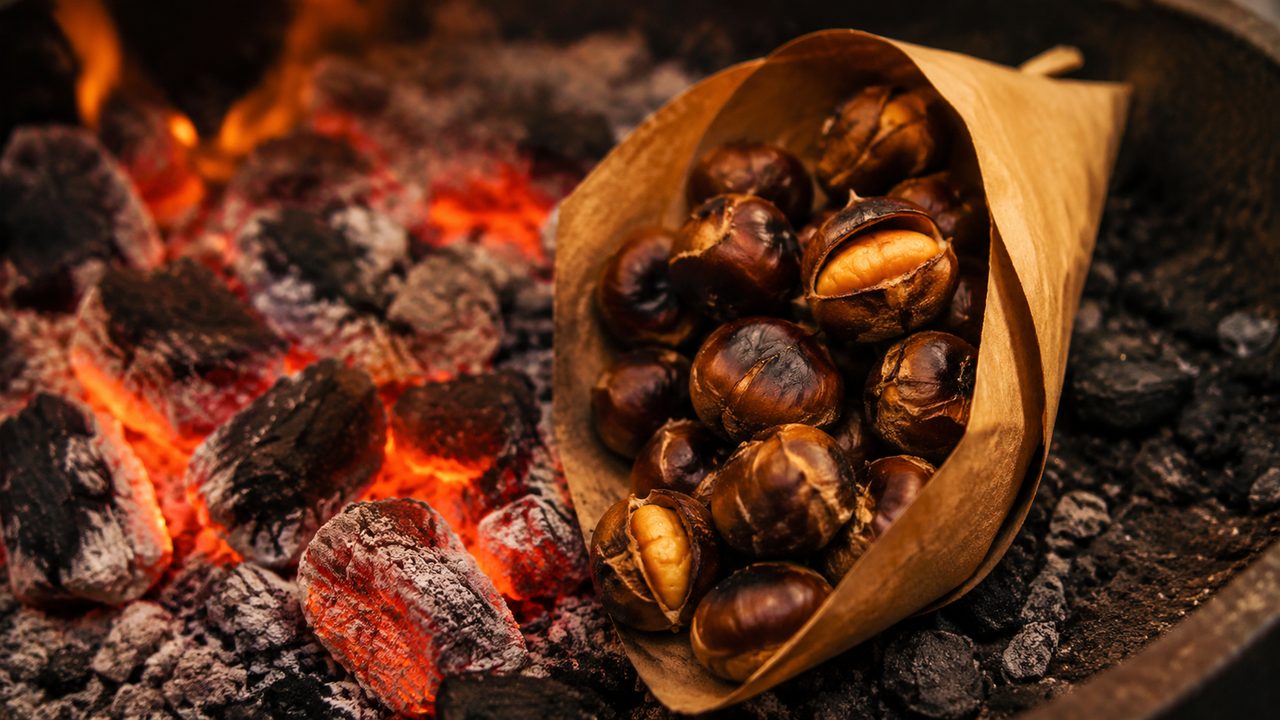
The technique has not changed much. The vendor scores each nut — a single cut across the shell — to let steam escape, then roasts them over a charcoal or gas fire in a perforated pan, shaking it constantly so they cook evenly. The cut is essential: an unscored chestnut can burst. Done properly, the shell peels back easily, the nut inside is tender and sweet, and the whole operation smells like the market itself. The cones of paper used today are the direct descendant of the newspaper cones vendors wrapped a century ago.
Where you'll find them
The names change with the country: castagne arrostite or caldarroste in Italy, marrons chauds in France, heiße Maroni in Germany and Austria. You will find them at the edges of Christmas markets and on busy shopping streets, usually from a stand with a small chimney and a mound of nuts cooling on the counter. Italy and France are the strongest territory — the roaster is a permanent winter fixture in Rome, Milan, Paris and Lyon — but the stands are now common across central Europe, especially in Vienna and Munich during the market season.
Chestnuts and marrons glacés
Roasted chestnuts are the everyday end of the tradition; marrons glacés are the luxury one. The French glacé is a large chestnut candied slowly in sugar syrup until it turns translucent and tender, then glazed — a delicate, expensive process that makes the boxes a Christmas gift rather than a street snack. A cone of roasted nuts costs a few euros; a box of marrons glacés can cost ten times that. Both are worth knowing because they answer different questions: the cone is for now, the box is for someone at home.
How to eat them well
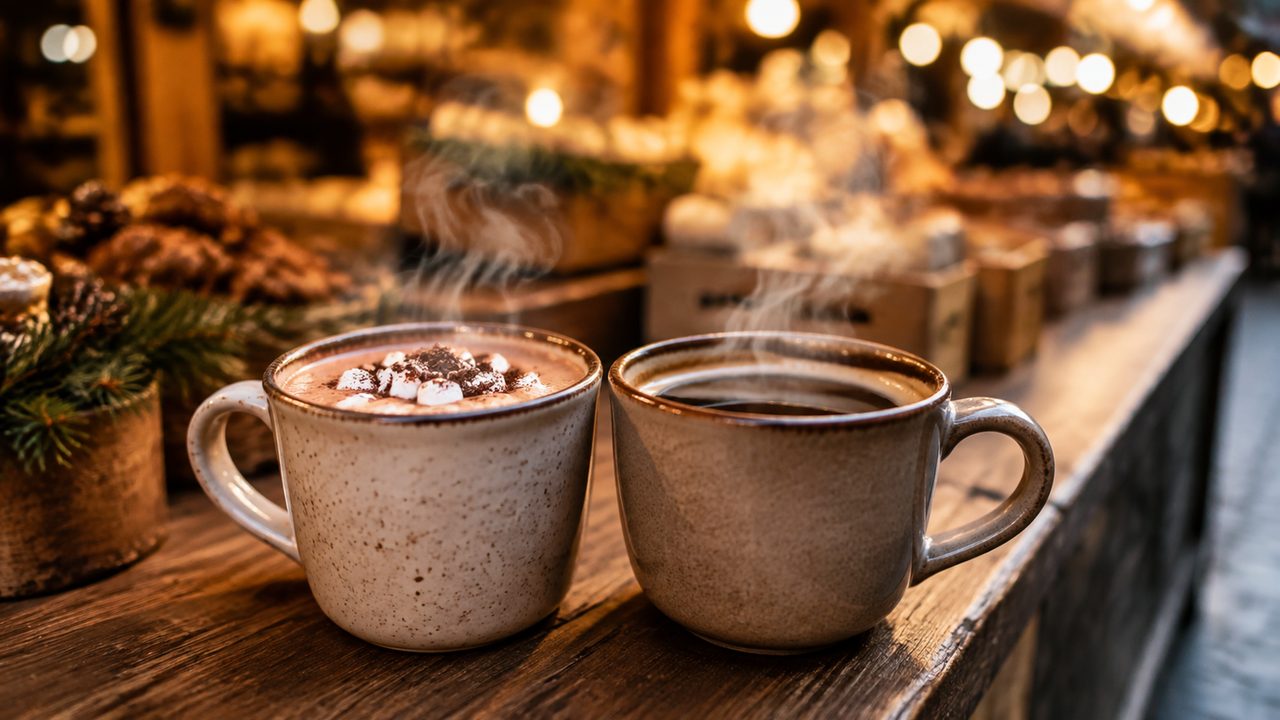
Eat roasted chestnuts while they are still warm — they stiffen and dry as they cool, and the flavour fades within half an hour. Peel the shell back from the scored cut, and expect a thin brown skin underneath that you may need to pull away; it is edible but slightly bitter. The nuts are filling, so a single cone of a hundred grams or so is a snack for one, not a meal for the family. They pair well with mulled wine or hot chocolate, and they are the rare market food that works as well in your pocket as at a table.
What to pay and where to skip
Prices run about €3 to €5 for a paper cone in most European cities, depending on weight and location. The tourist-heavy stands next to major monuments charge the top of the range; the same vendor two streets away is often cheaper. Buy from a stand with a steady queue or a visibly fresh pan — chestnuts kept warm too long turn mealy. If a cone sits looking grey and dry, walk on. And remember the practical rule of the market: small notes, not a large bill, and peel one nut before you pay if the vendor looks doubtful.