On this page
A town sized for the season
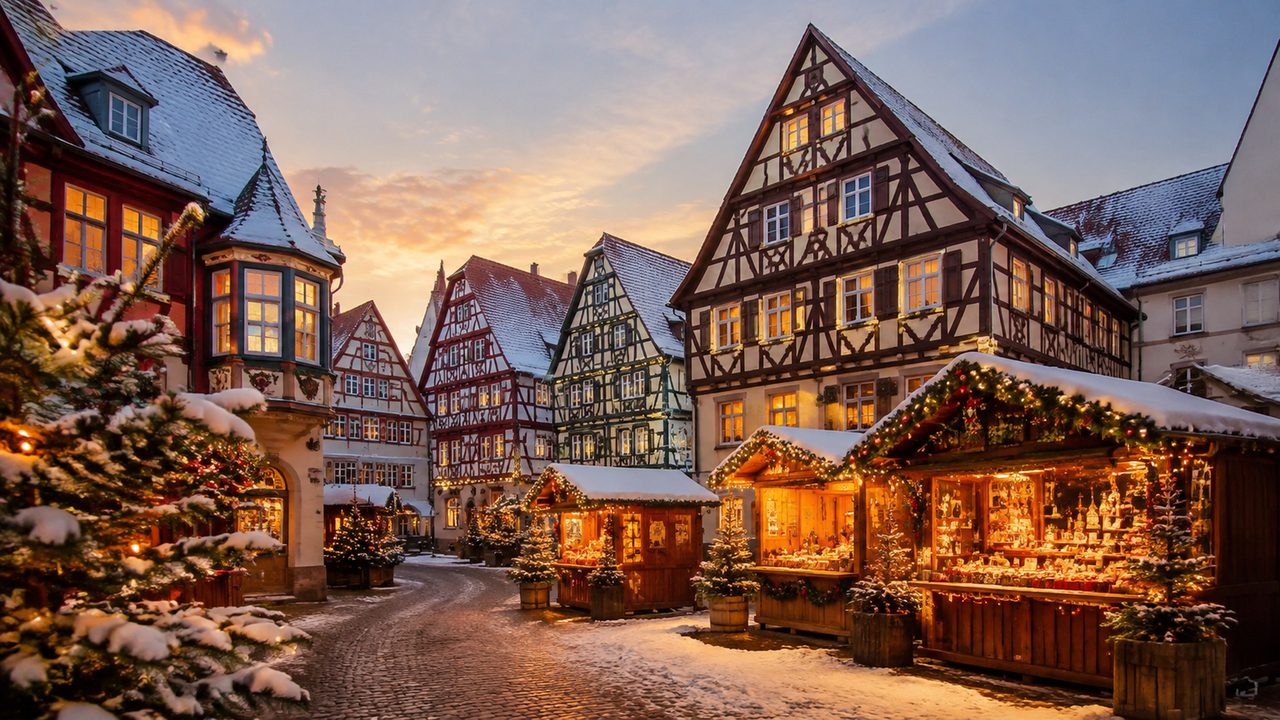
Rothenburg ob der Tauber is small enough to walk across in twenty minutes and looks like a stage set for a Christmas market: a fully walled medieval town on the Romantic Road, with gabled half-timbered houses, cobbled lanes and a market square that floods with visitors in December. Because the town survives largely on tourism, it has turned Christmas into a year-round industry — which means the famous shops are open in July as well as December, and the atmosphere in the off-season is almost as festive as the market itself.
The Reiterlesmarkt
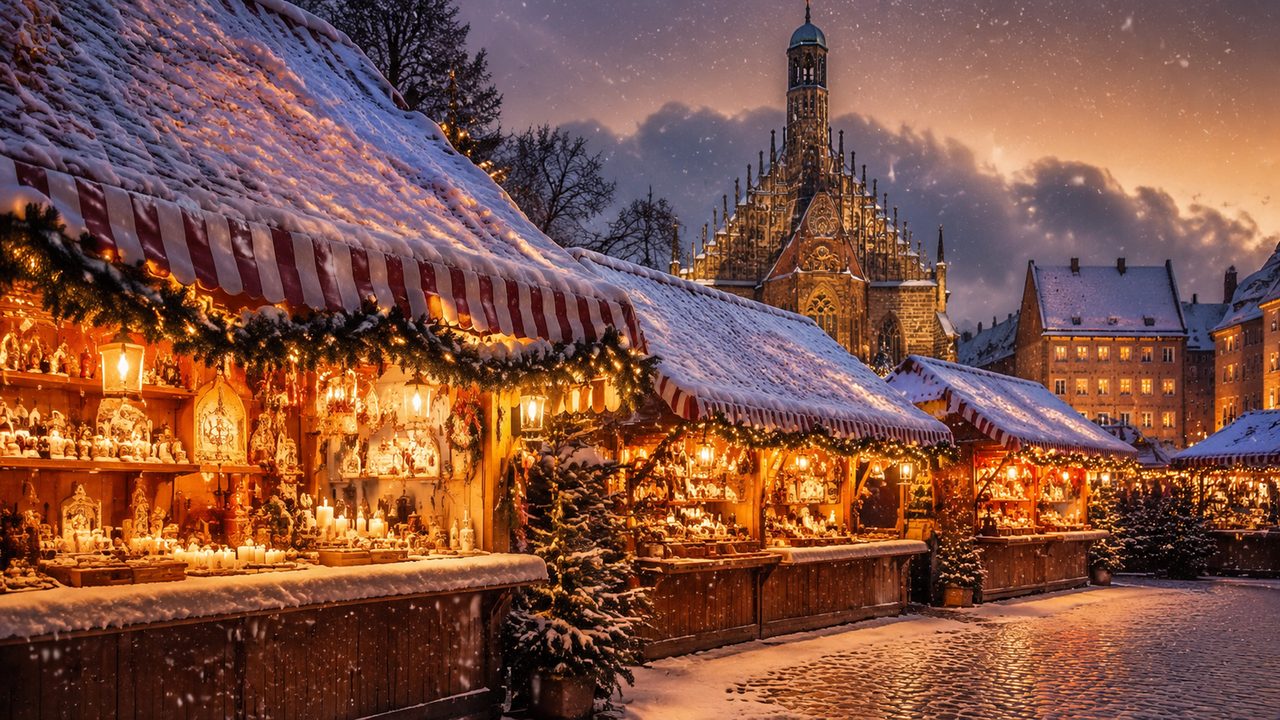
The town's market is the Reiterlesmarkt, named for the Reiterle, a hooded rider figure from local legend who is said to ride through the countryside around the Tauber valley in the weeks before Christmas. The market fills the Marktplatz in front of the town hall, with wooden stalls selling ornaments, candles, toys and the region's craftwork, and it runs from the end of November to 23 December. Its proportions are the point: everything is scaled to a small square, so the crowd feels dense but the whole thing stays walkable in an hour.
The Christmas stores
Rothenburg's best-known Christmas attraction is not the market but the year-round stores. Käthe Wohlfahrt, the largest, fills a townhouse near the square with tier upon tier of glass baubles, wooden angels, pyramids and nutcrackers, and its Weihnachtsdorf annex claims to be a village of Christmas decorations in miniature. A second branch faces the market directly. Even if you have no intention of buying, the stores are worth a look for the sheer density of ornament — and they are the reason a summer visit to Rothenburg still feels like December.
Schneebälle and the local kitchen
The local food is the Schneeball, or snowball: a pastry made from strips of dough pressed into a ball, fried, and dusted with sugar or dipped in chocolate. They are sold at bakeries all over town for about €2.50 to €3.50, and they keep for weeks, which makes them the classic take-home gift. The original is plain and powdered; the filled versions — with chocolate, nuts or marzipan — are newer inventions. For warmth, the market's Glühwein runs about €4 with the mug deposit, and the café next to the town hall does a strong hot chocolate.
Walls, towers and the night watchman
The market is the evening event, but the town itself is the daytime one. The medieval ramparts form a complete circuit with covered walkways, open to walkers, and the towers reward anyone willing to climb. The most photographed corner in town is the Plönlein, a sloping junction of two timbered streets beneath a gate tower. In the evening the night watchman leads a lantern tour through the old town in costume, telling the town's history in a mix of fact and theatre — the best-value thing in Rothenburg after the market closes.
Practical notes
Rothenburg is a day-trip town: Nuremberg is about an hour away by train or car, and most visitors arrive for the afternoon and stay for the lights. Parking is outside the walls, so expect a walk in. The 2024 Reiterlesmarkt ran 29 November to 23 December, with stalls open from around 10am to 8pm. Cobblestones get slippery, the town is hilly in places, and the two Saturdays before Christmas are the busiest days of the year. Go on a weekday, buy your snowballs early, and save the Christmas stores for the middle of the day when the market queues are longest.